Garden “U” Trowel
Ergonomic handle design — redesigning a daily object.
- Year
- 2025
- Section
- Object
- Keywords
- ergonomics studies · universal design · gardening
- Team
- Sky ChengJimmy Liu
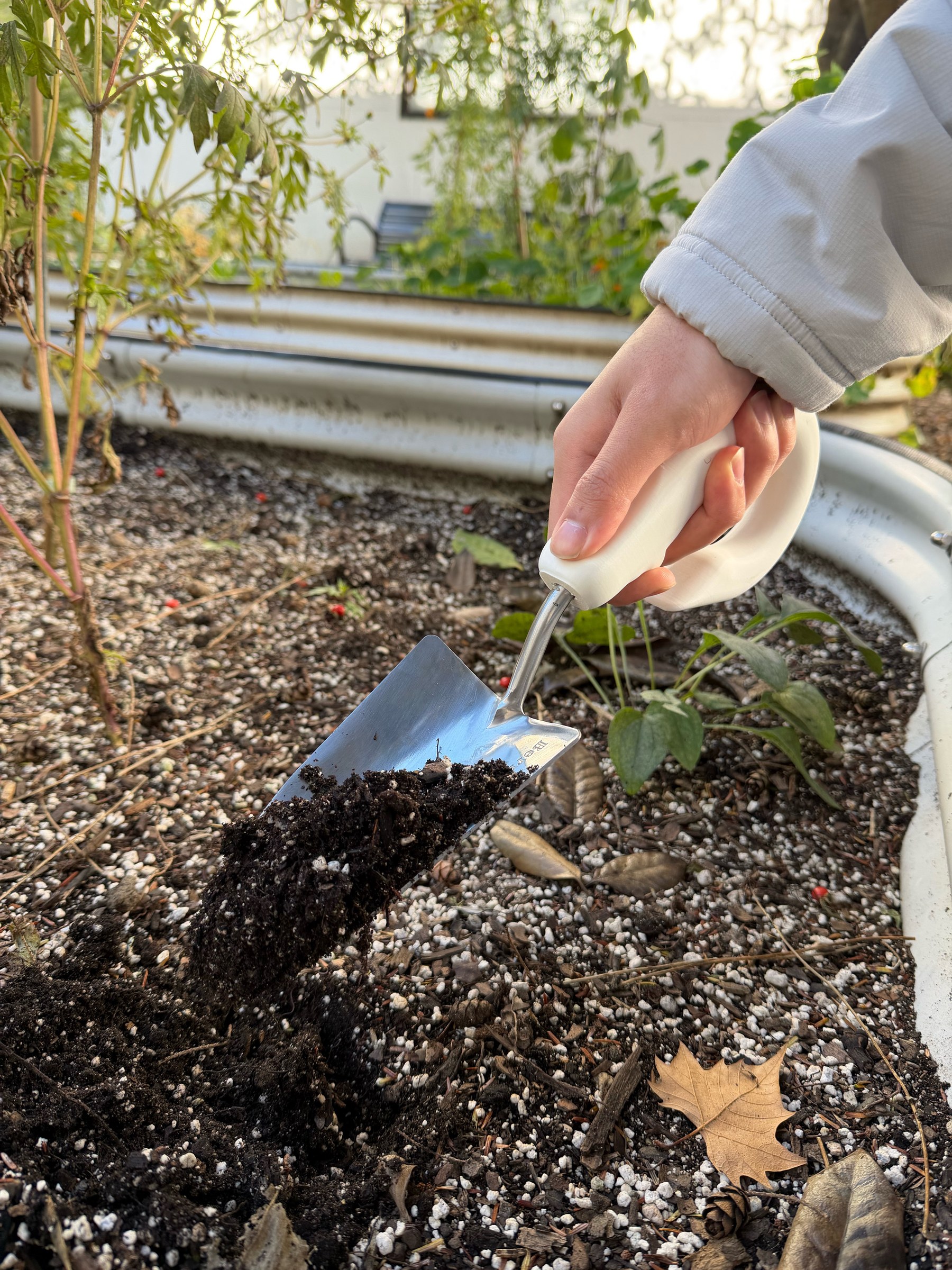
People have been gardening with hand tools for centuries. But even with so many modern versions, a lot of them still hurt your hand and wrist. So we rethought the handle — using ergonomics studies and universal design — to make gardening less tiring, more natural, and more fun for everyone.
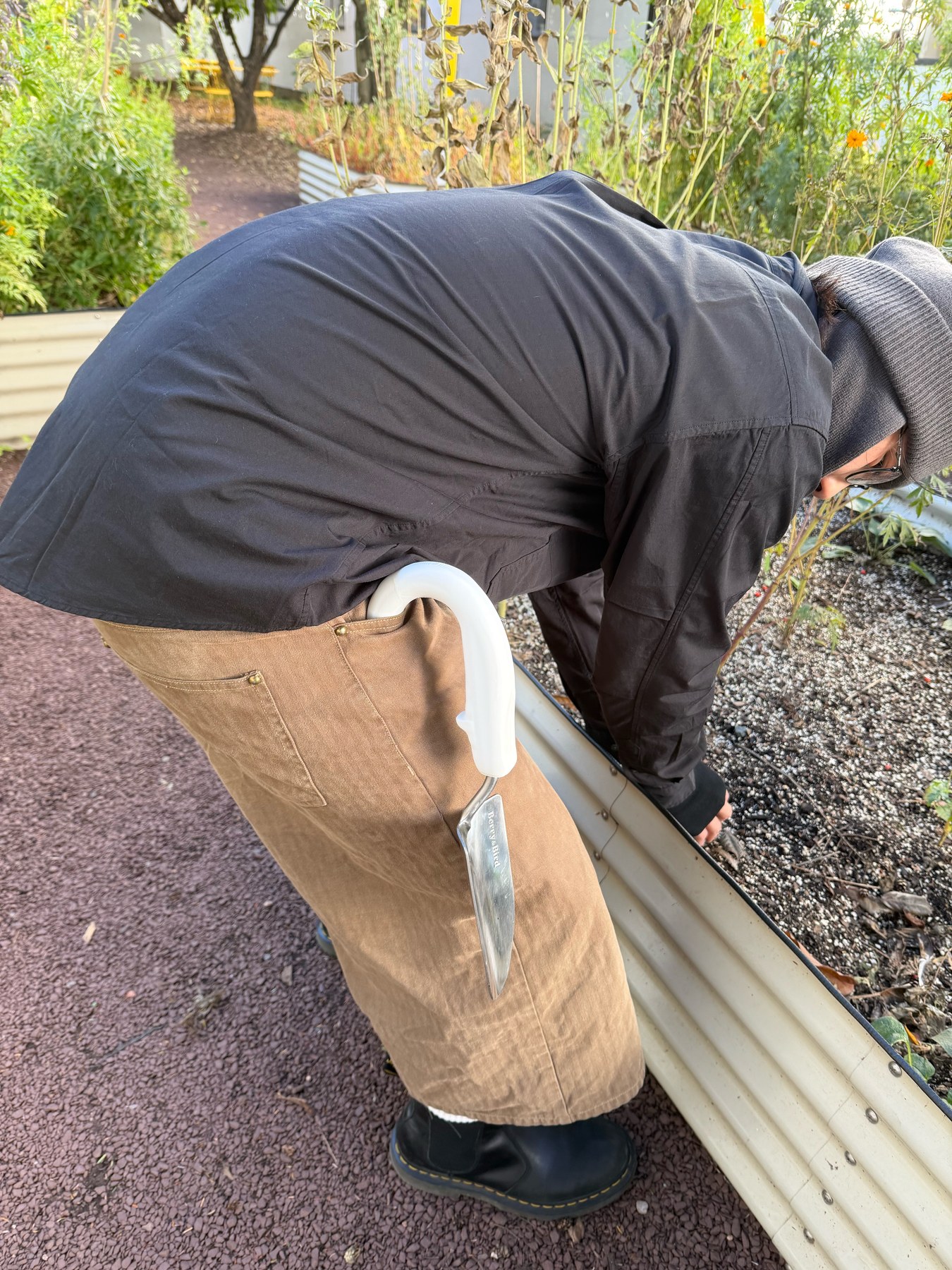
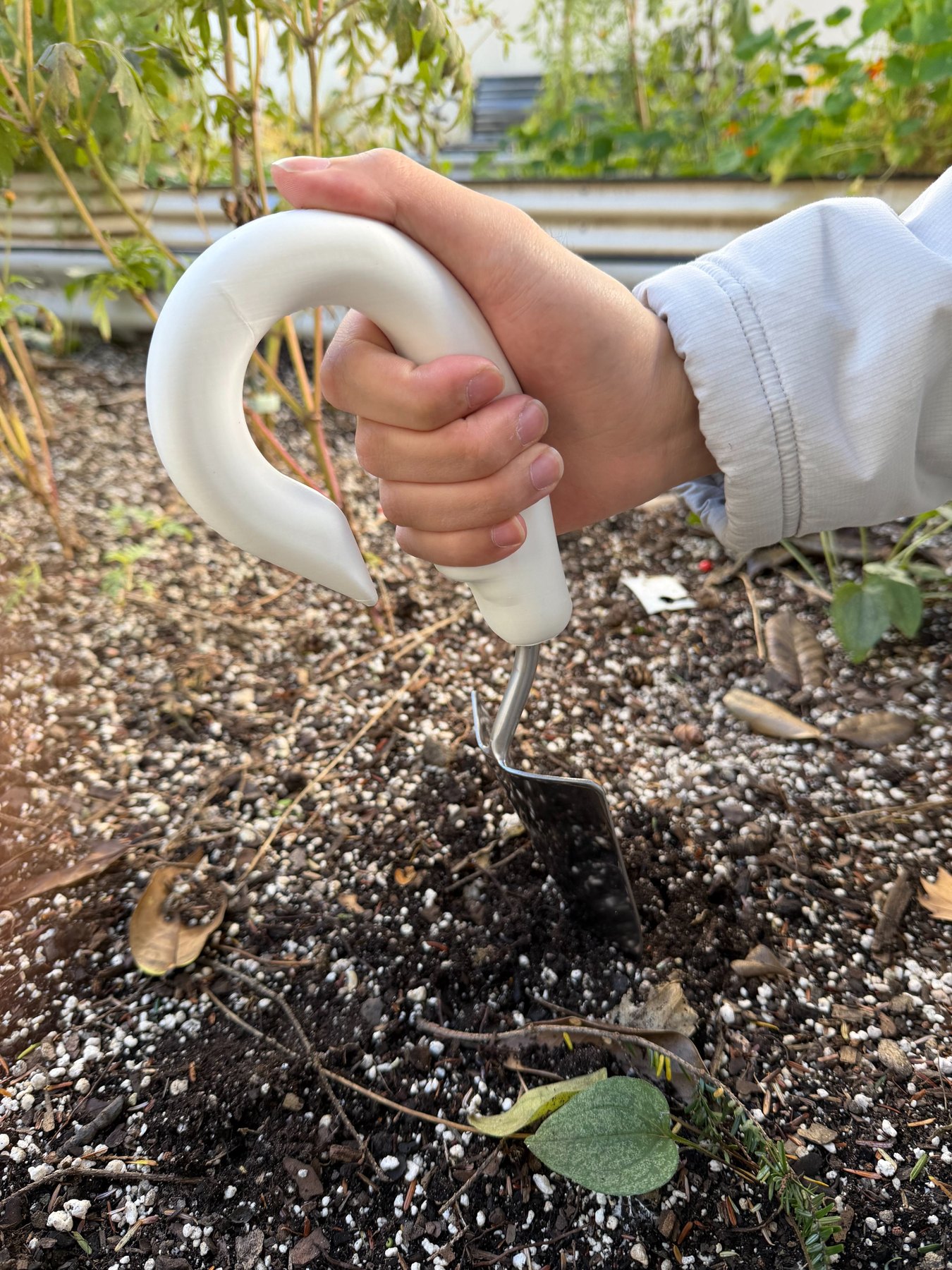
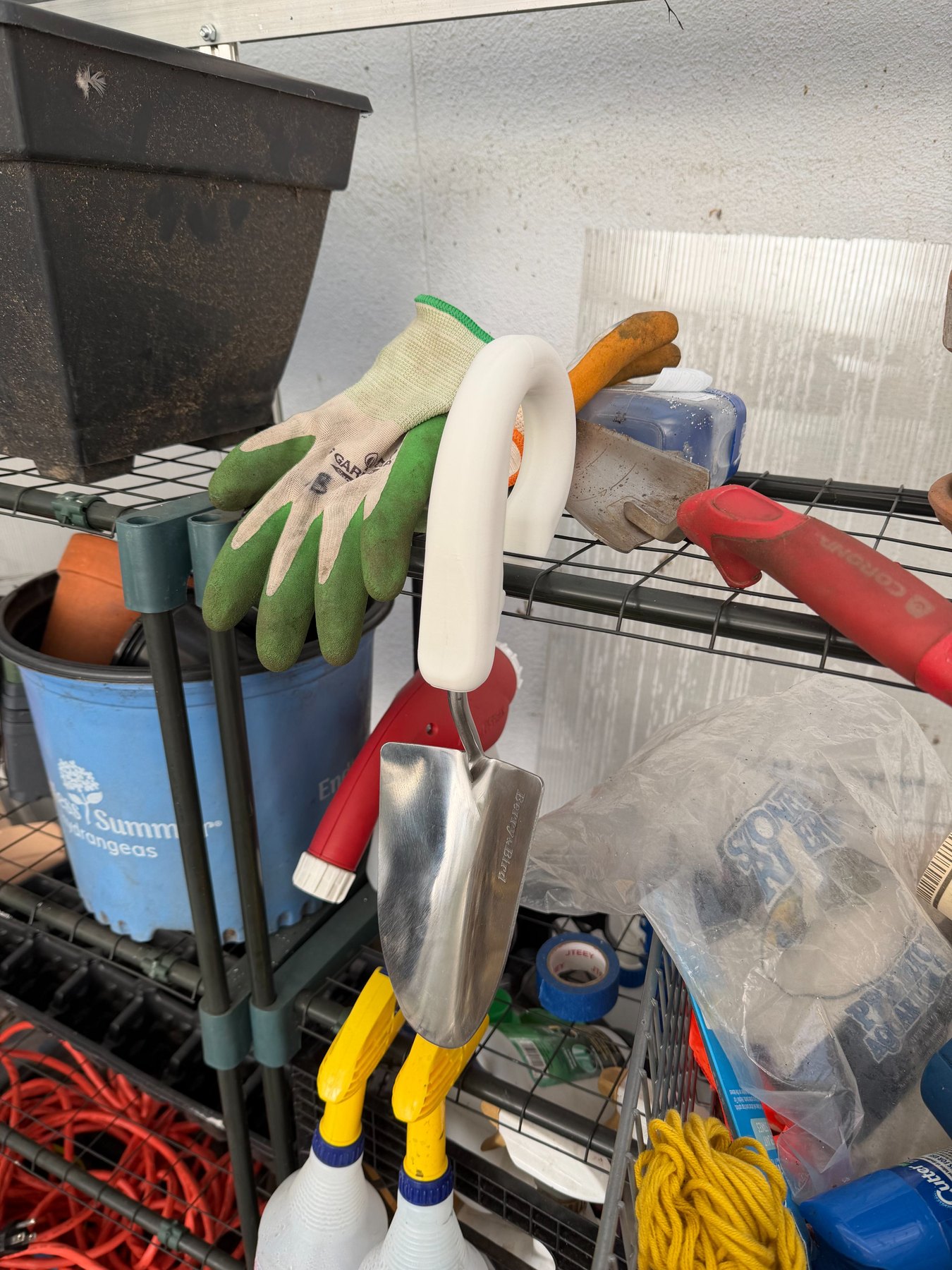
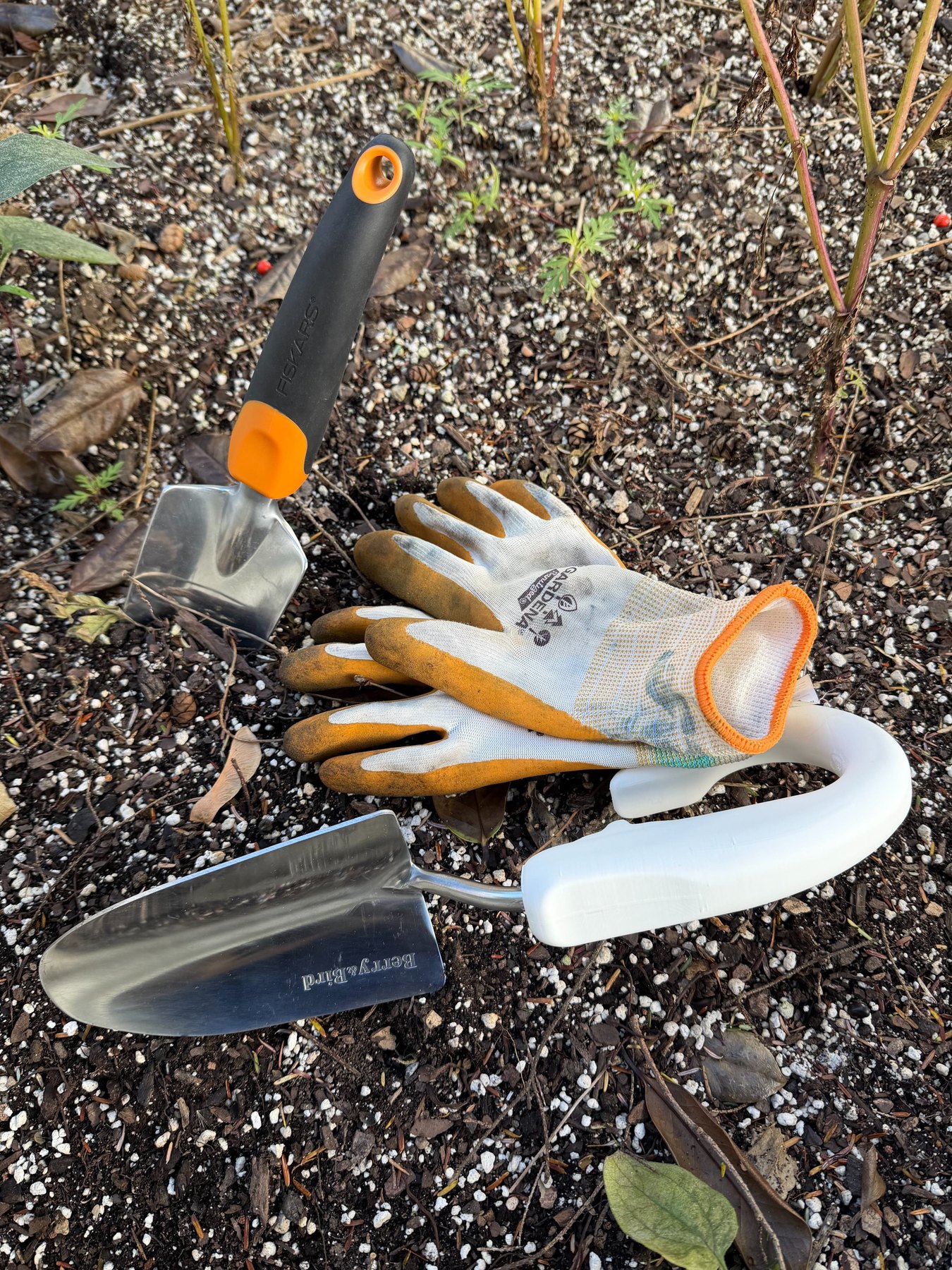
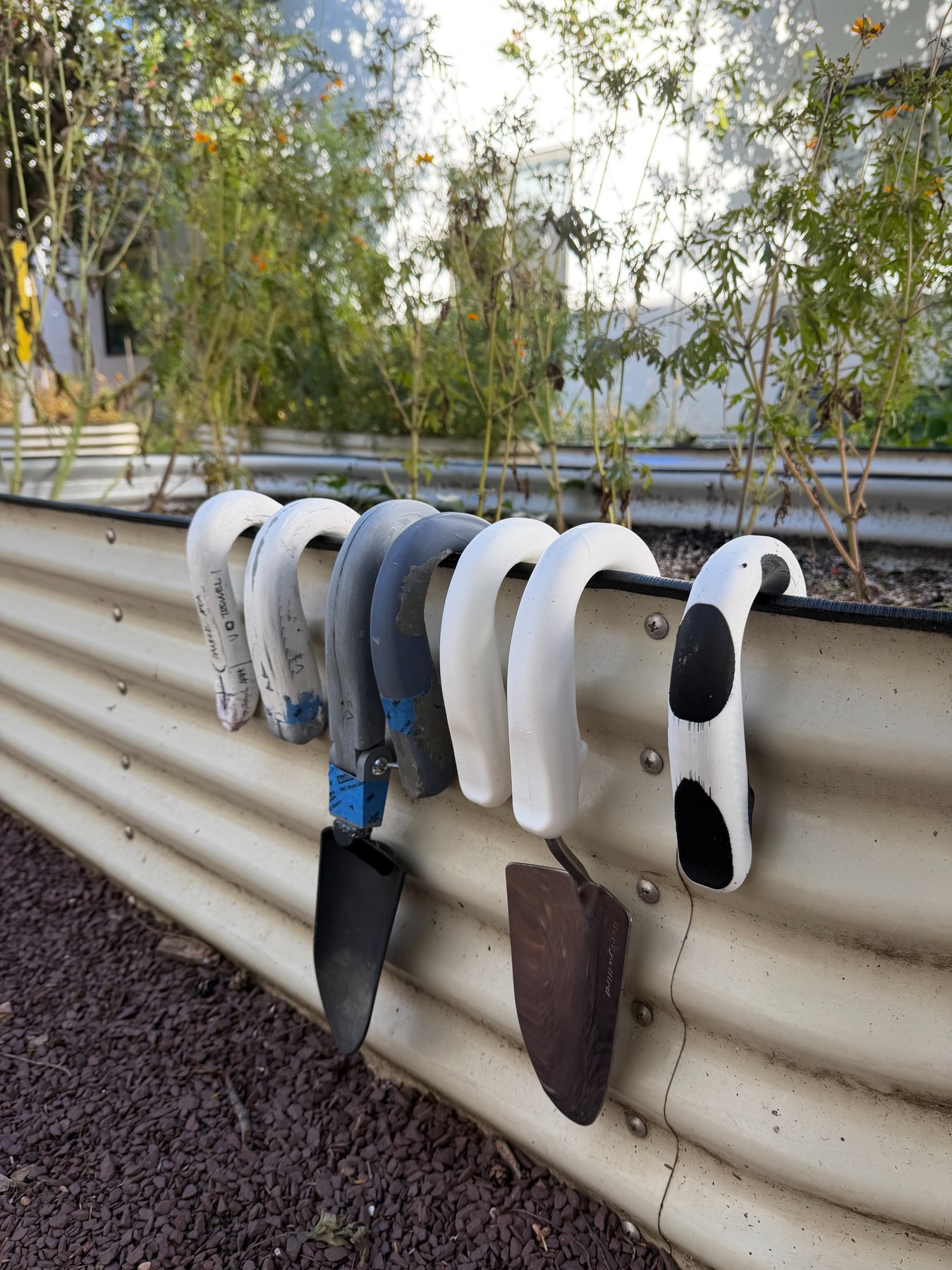
The “U” shape lets you hook the trowel on, so your hands are free for everything else.
The handle in 3D.
Why hands hurt
It all comes down to repetitive force, awkward wrist angles, and pressure in one spot.
A trowel asks your hand to do three things.
Grip and push down. Scoop or pry, which twists. Lift and shake, which keeps the load moving. Each one can hurt if the tool doesn't line up with how your body naturally sits.
Where you feel it.
Gripping too hard and bending the wrist sideways shows up in the web of your thumb, the outer wrist, the heel of your palm, and your forearm.
What causes it.
Handles that are too small, too smooth or too short. A handle-to-blade angle that's too straight. No cushioning or shape. Weight in the wrong place.
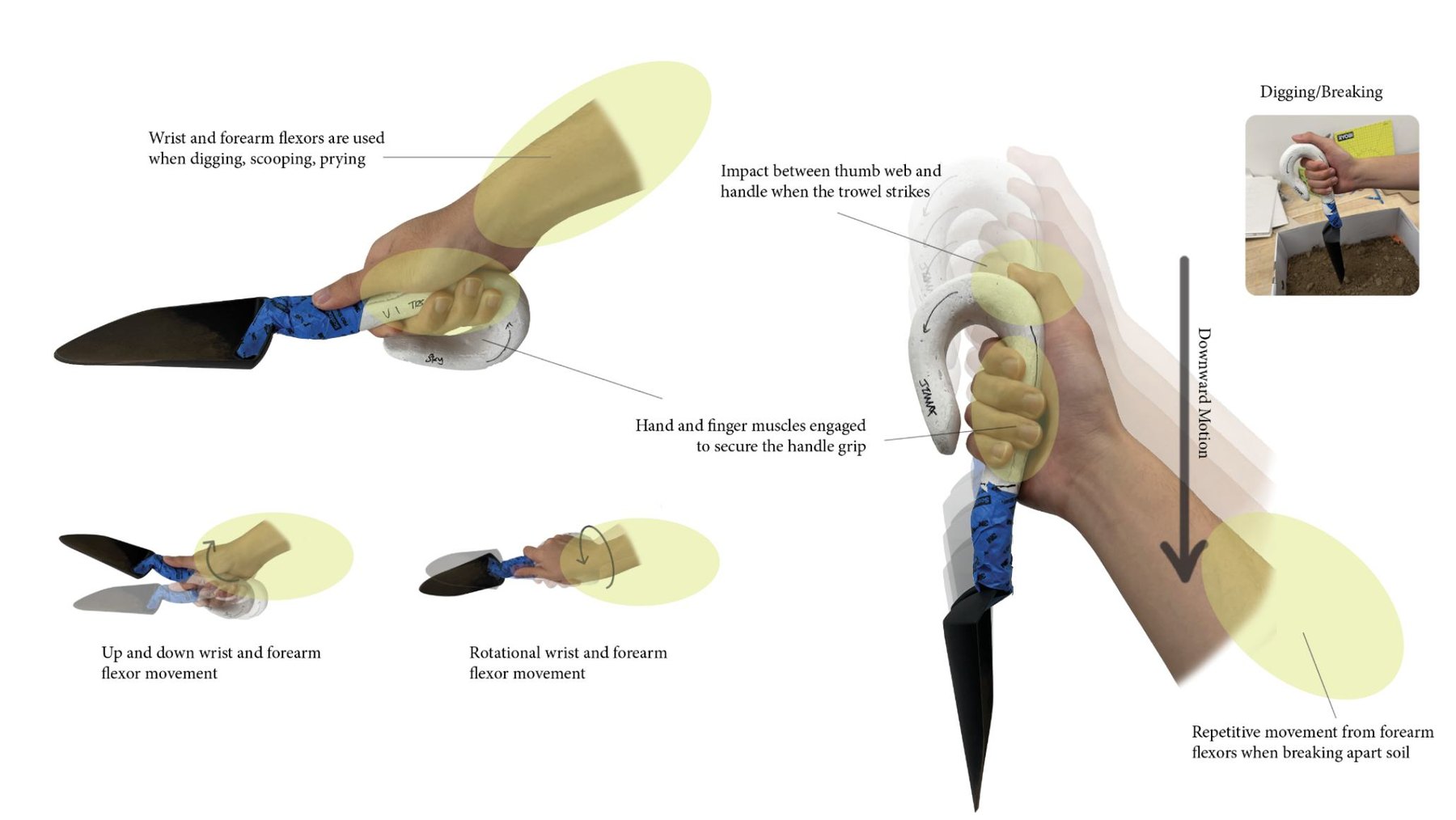
Ergonomic design focus
Palm center
Pressure + torque zone
Soft padding spreads the pressure out evenly.
Thumb base
Stability & push control
A small thumb rest, or a flat spot, takes the strain off the muscle.
Finger flexor zone
Main grip
An oval, D-shaped section lets your hand close around it naturally.
Wrist alignment
Pivot axis
The angle between handle and blade decides how comfy your wrist is.
Forearm direction
Leverage control
Balanced weight stops your hand from over-rotating.
Design inspiration — Universal Design
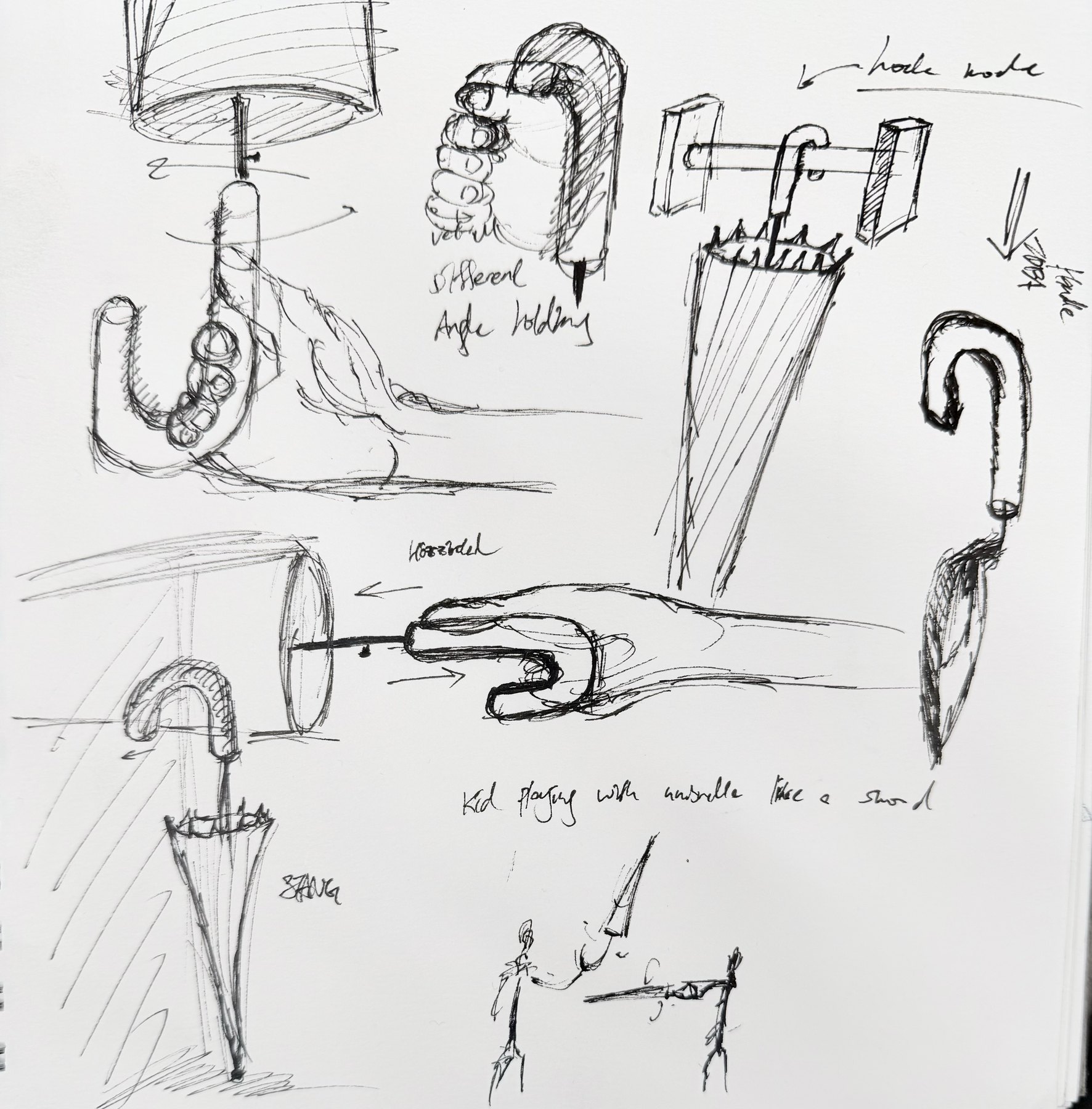
Think about an umbrella handle. That curve does so much — you can hook it on almost anything, and it turns freely whichever way you move. It's playful and familiar too. A lot of us played with umbrellas as kids and turned them into all kinds of tools. Because everyone already knows the shape, you pick up the handle and just get it — nothing to learn.
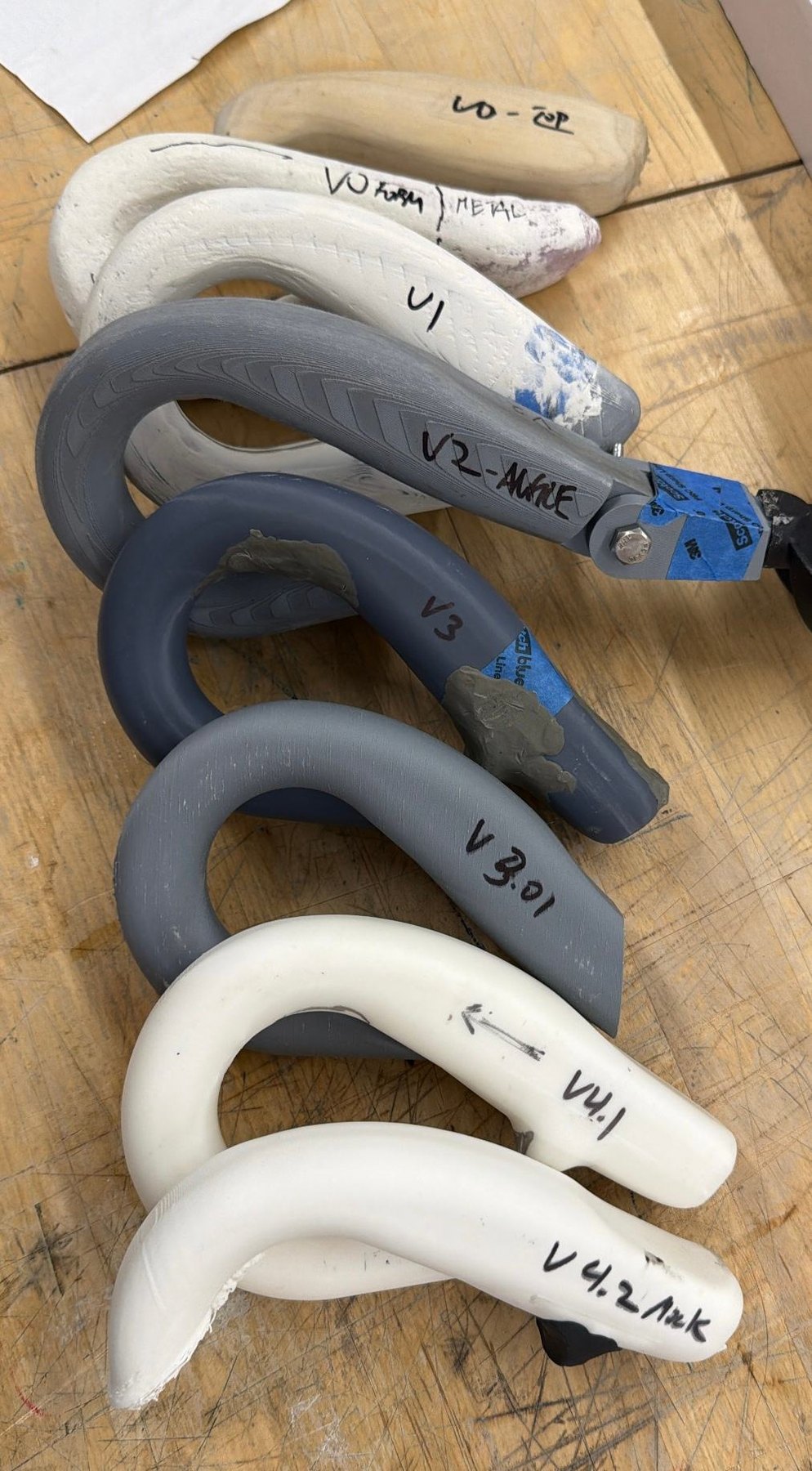
V0 — form exploration
We didn't want another boring, traditional handle — we wanted something you'd never seen on a shelf before. So we put classic tool handles next to the curve of an umbrella handle, and mixed the best of both: something that works well and is fun to look at.
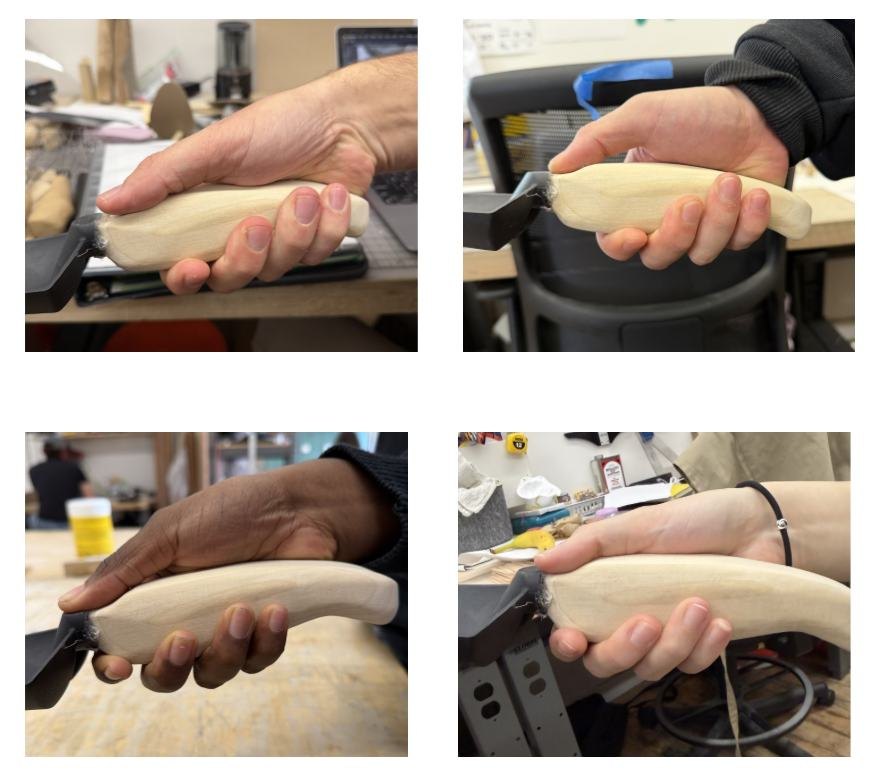
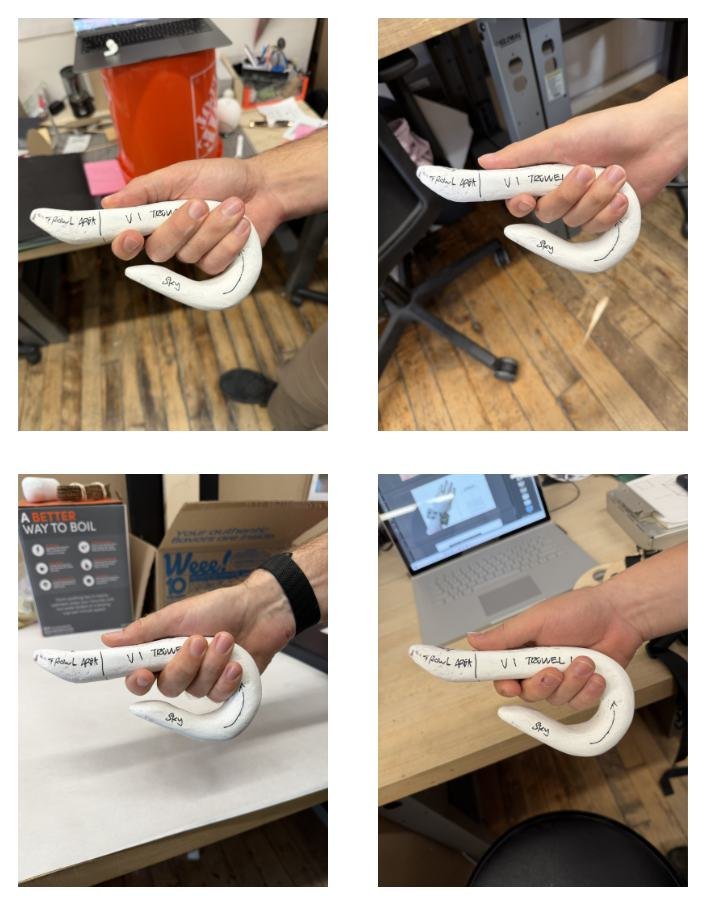
V0 → V3 — early development
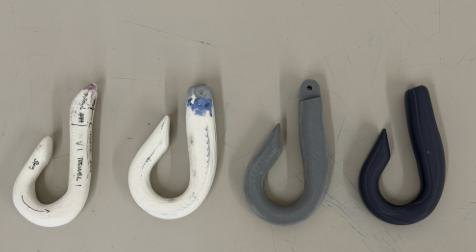
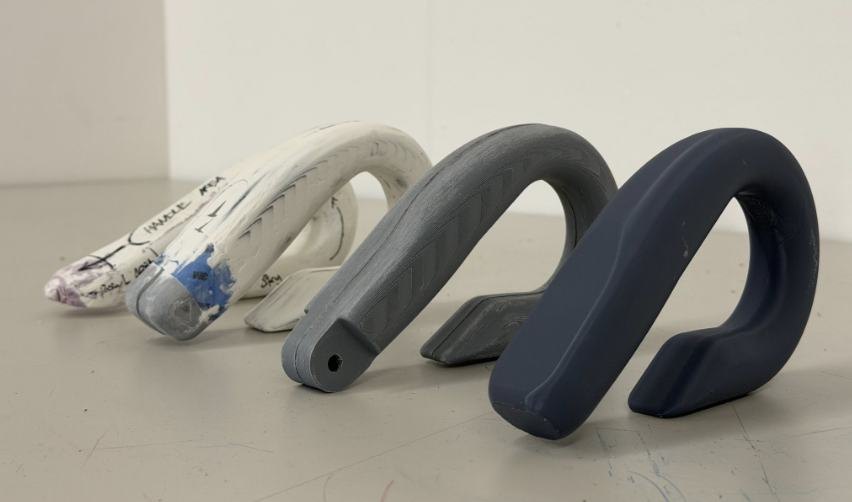
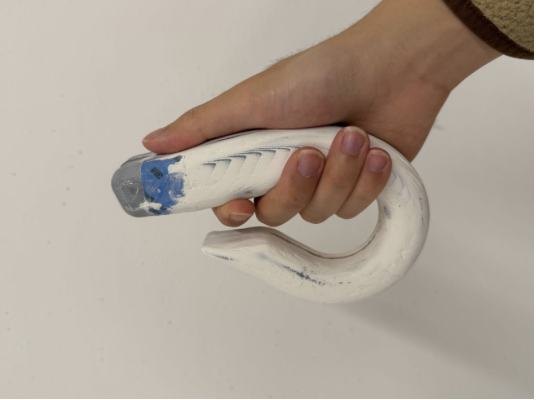
No thumb rest, too wide overall, and the edges too rigid.
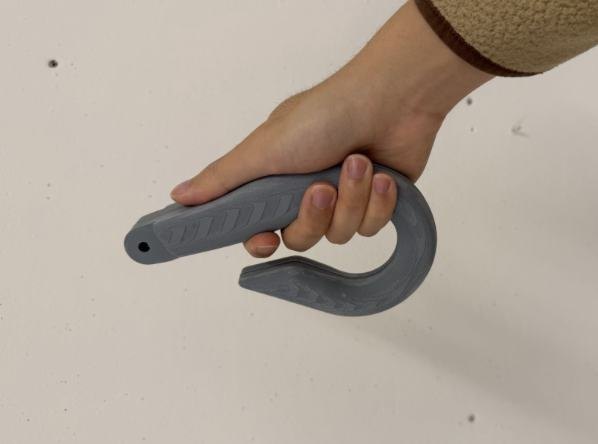
Smoother edges needed. Still a bit wide for small hands, and the gap's too tight for big hands or work gloves.
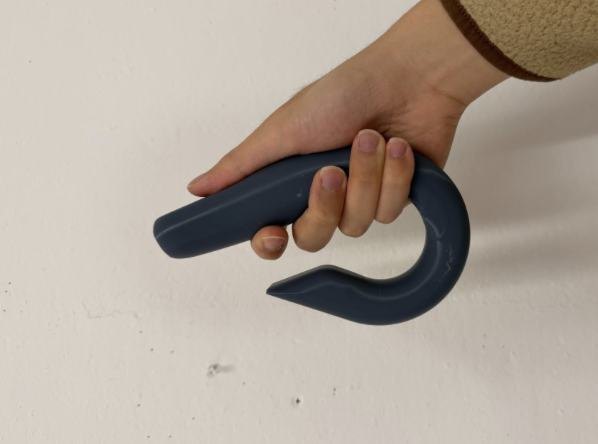
Shape and size feel right, with a good gap between top and bottom. This is the one we took into user testing.
No thumb rest, too wide overall, and the edges too rigid.
Smoother edges needed. Still a bit wide for small hands, and the gap's too tight for big hands or work gloves.
Shape and size feel right, with a good gap between top and bottom. This is the one we took into user testing.
No thumb rest, too wide overall, and the edges too rigid.
Smoother edges needed. Still a bit wide for small hands, and the gap's too tight for big hands or work gloves.
Shape and size feel right, with a good gap between top and bottom. This is the one we took into user testing.
No thumb rest, too wide overall, and the edges too rigid.
Smoother edges needed. Still a bit wide for small hands, and the gap's too tight for big hands or work gloves.
Shape and size feel right, with a good gap between top and bottom. This is the one we took into user testing.
Everyday user testing
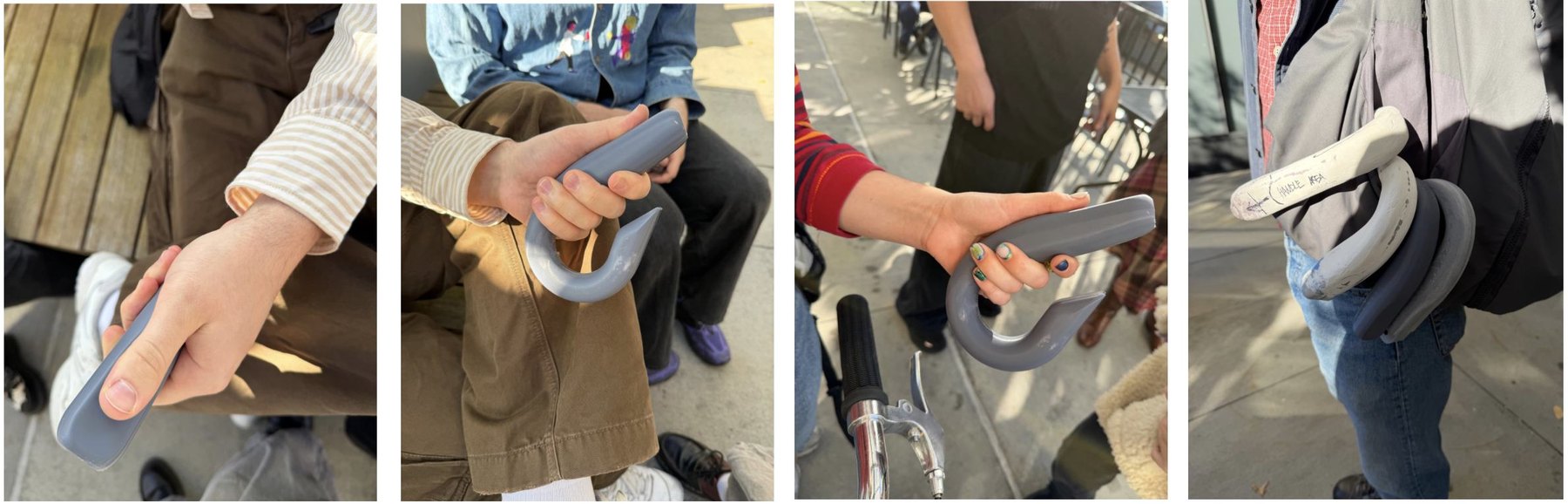
We tested V0 to V3 with all kinds of hands — right-handed and left-handed. People liked V3 the most: it felt like it had been made with different hands in mind. And everyone loved the hook. Hang it on your bag, carry it around, done.
Pro user testing
Then we asked the Pratt Dye Garden for help.
They both loved V3 — and the hook.
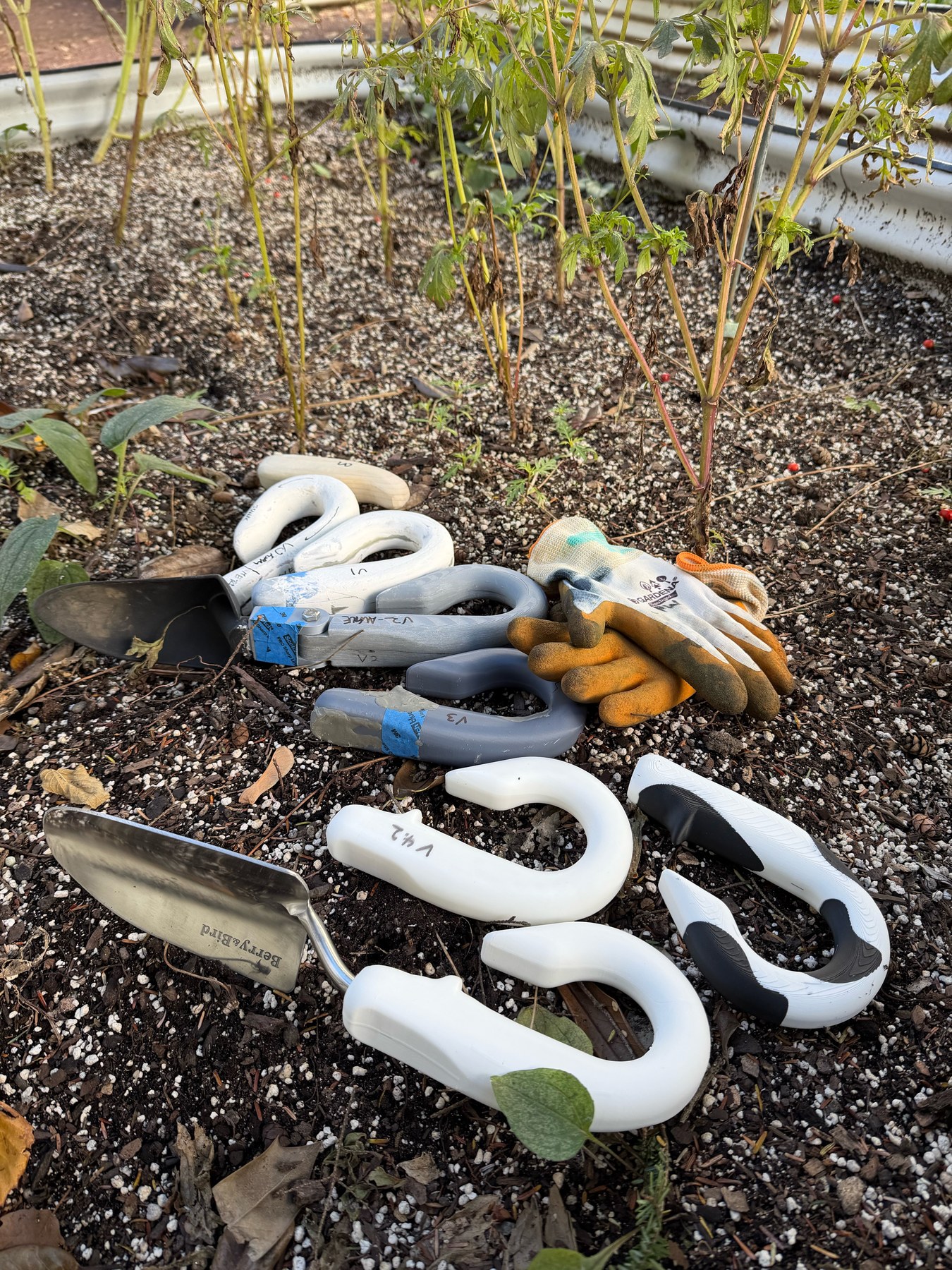
Out in the beds, they could hang it on any edge while they worked, instead of stabbing the trowel into the soil.
Form & comfort.
The size and shape got a lot of love. It gave them freedom to move, worked with lots of different grips, and stayed comfortable for long sessions.
Handle angle.
We gave them an adjustable V2 to try different entry angles. In the end, V3's angle still felt and worked the best.
Universal design.
Male and female testers felt exactly as comfortable.
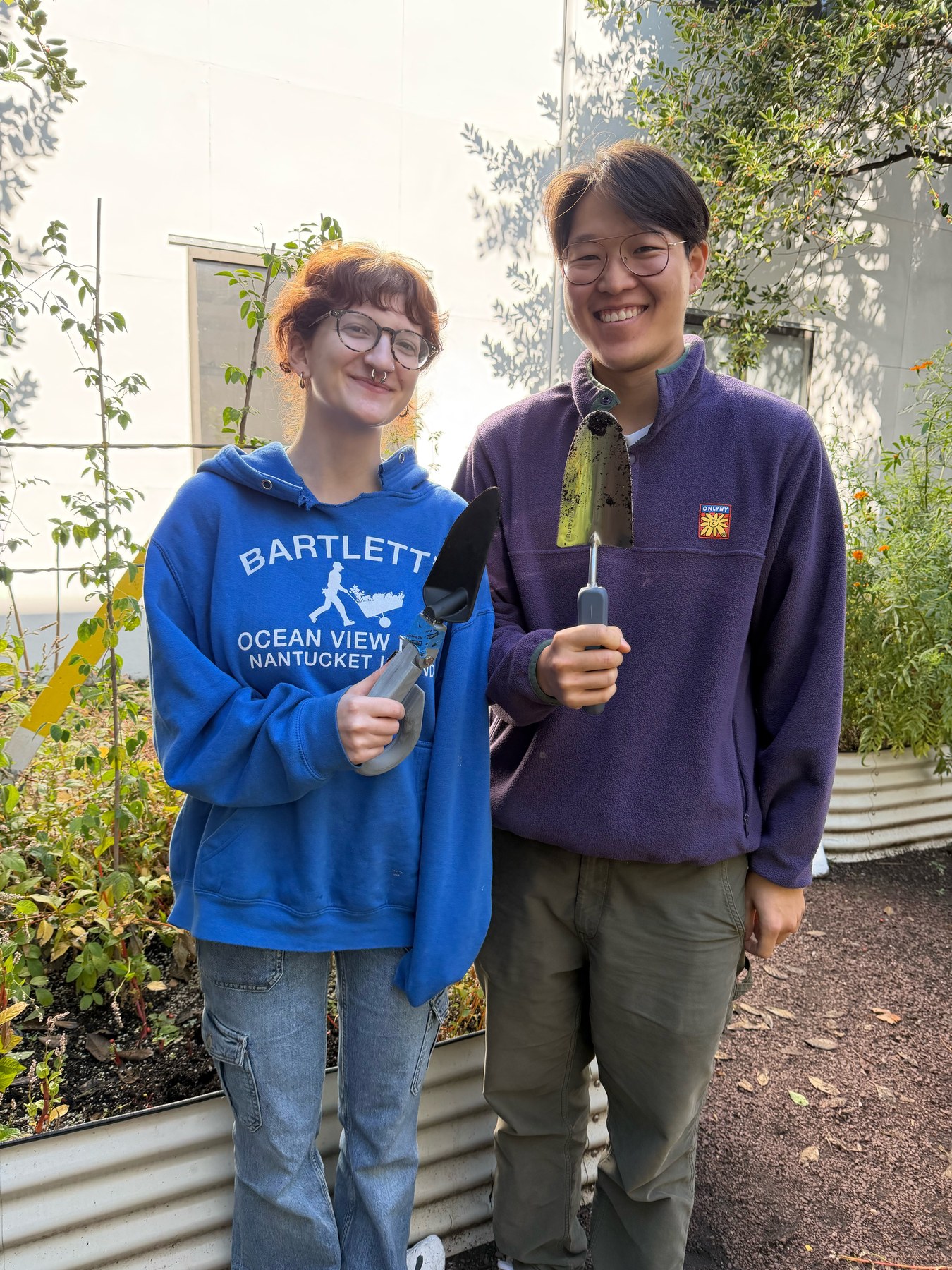
User testing with the Pratt Garden student workers — thank you all for the feedback that shaped the final design.
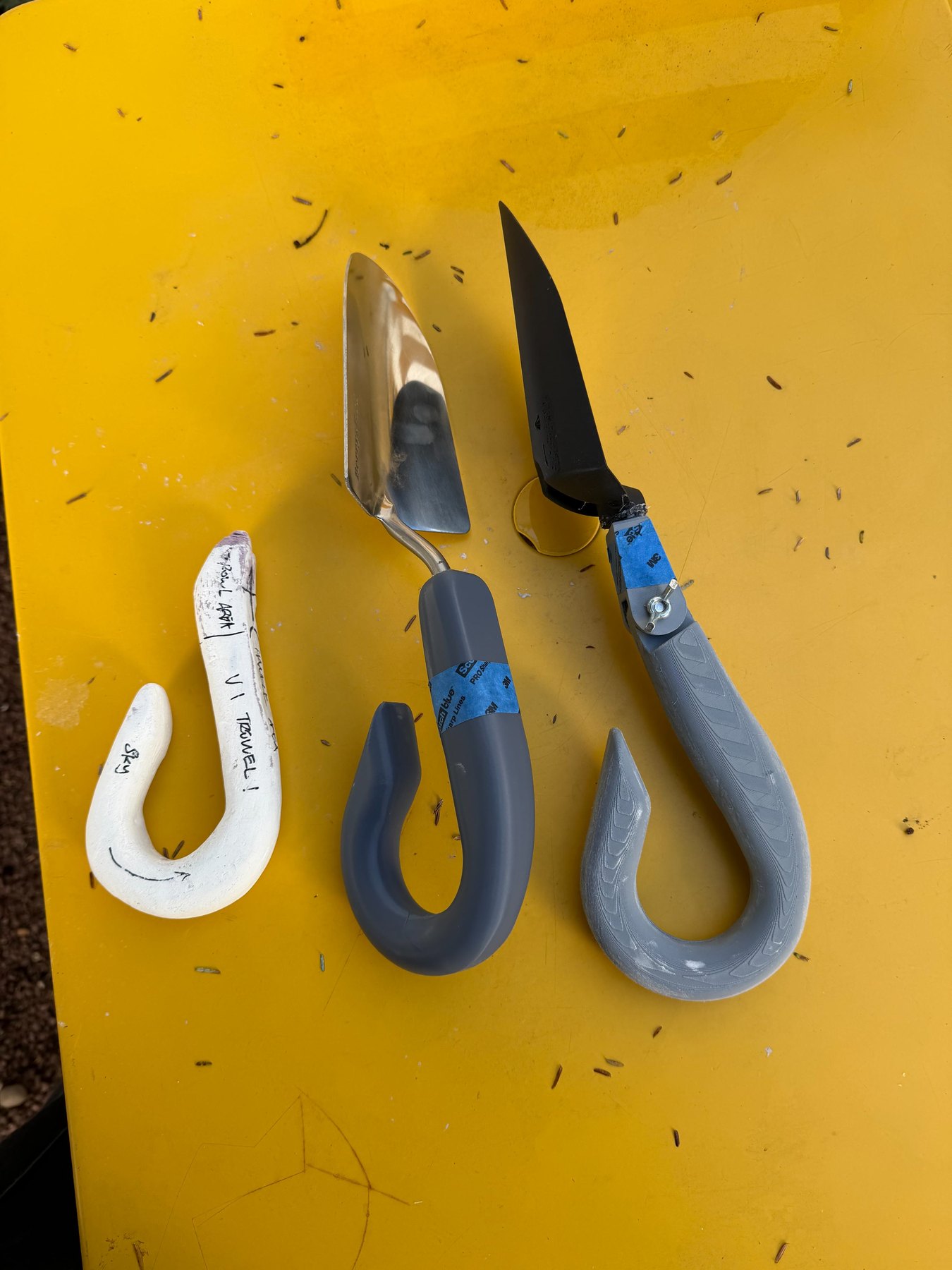
V2 for the angle, V3 for the whole body.
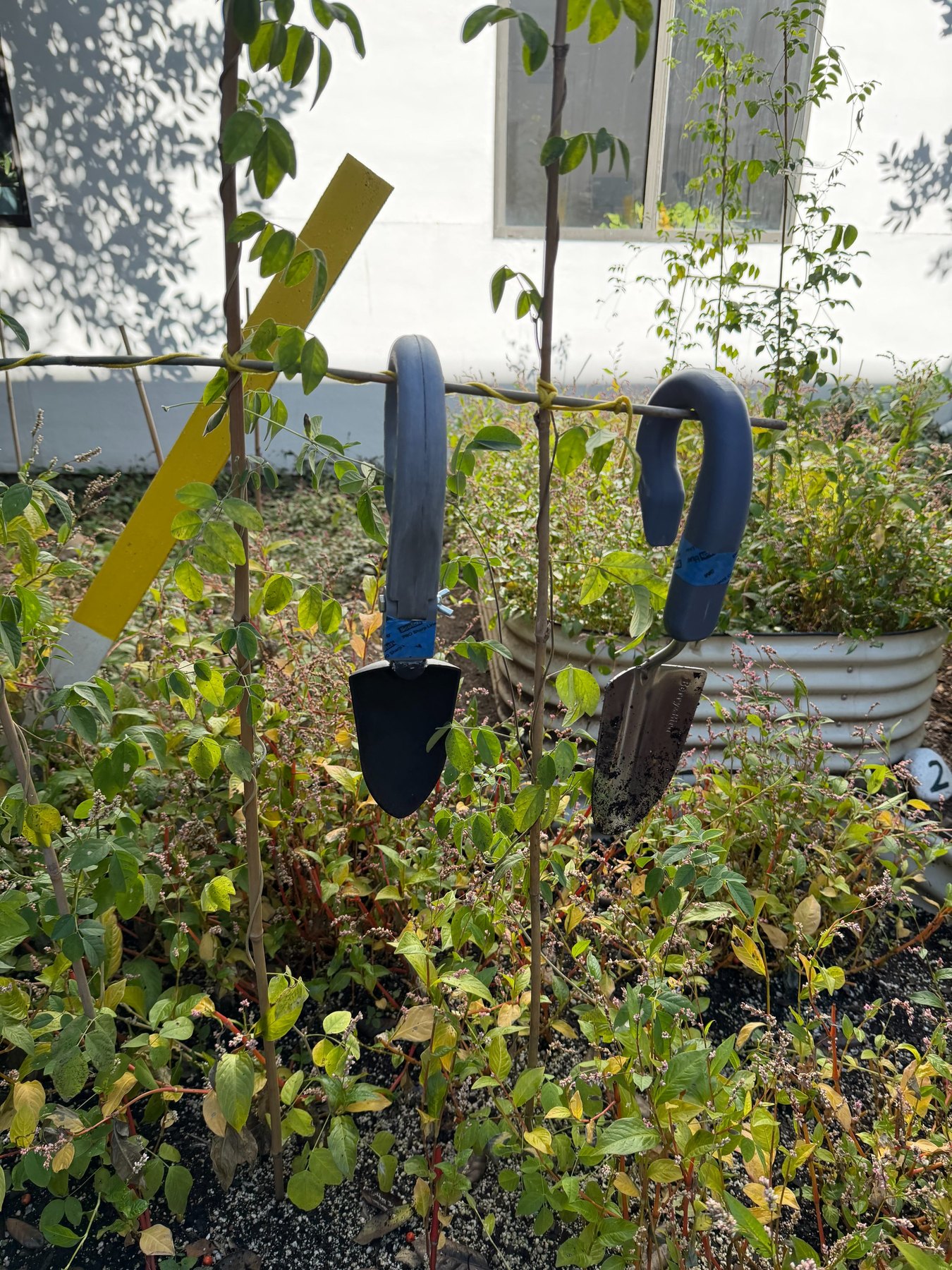
Pro testing, round two
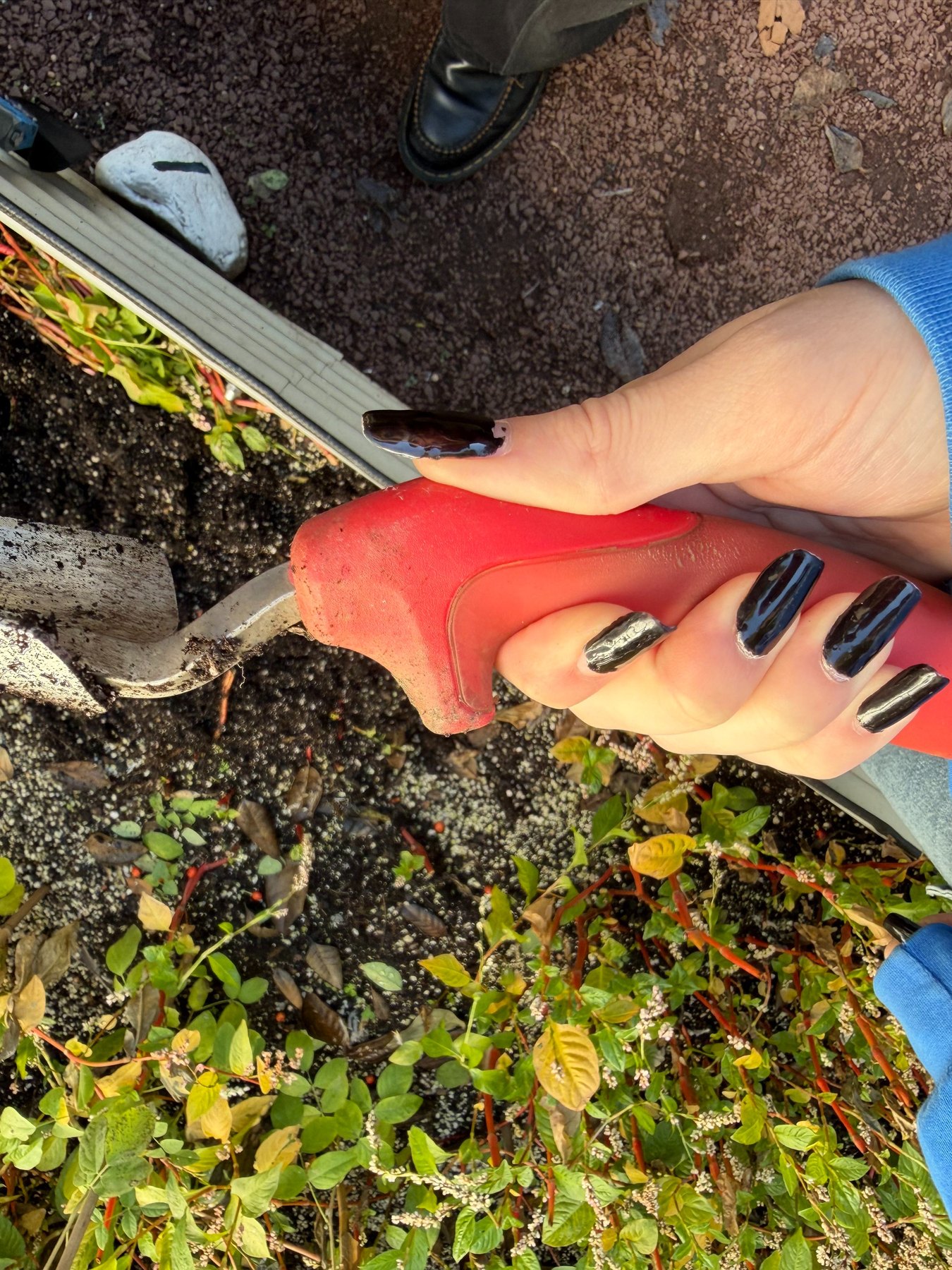
V3 wasn't great on straight pushes — your hand could slide down toward the soil. So we asked what their favourite trowel was. They loved this one, mostly for its index-finger rest: it gives you more control and lets you push forward properly.
V4 — an index-finger rest
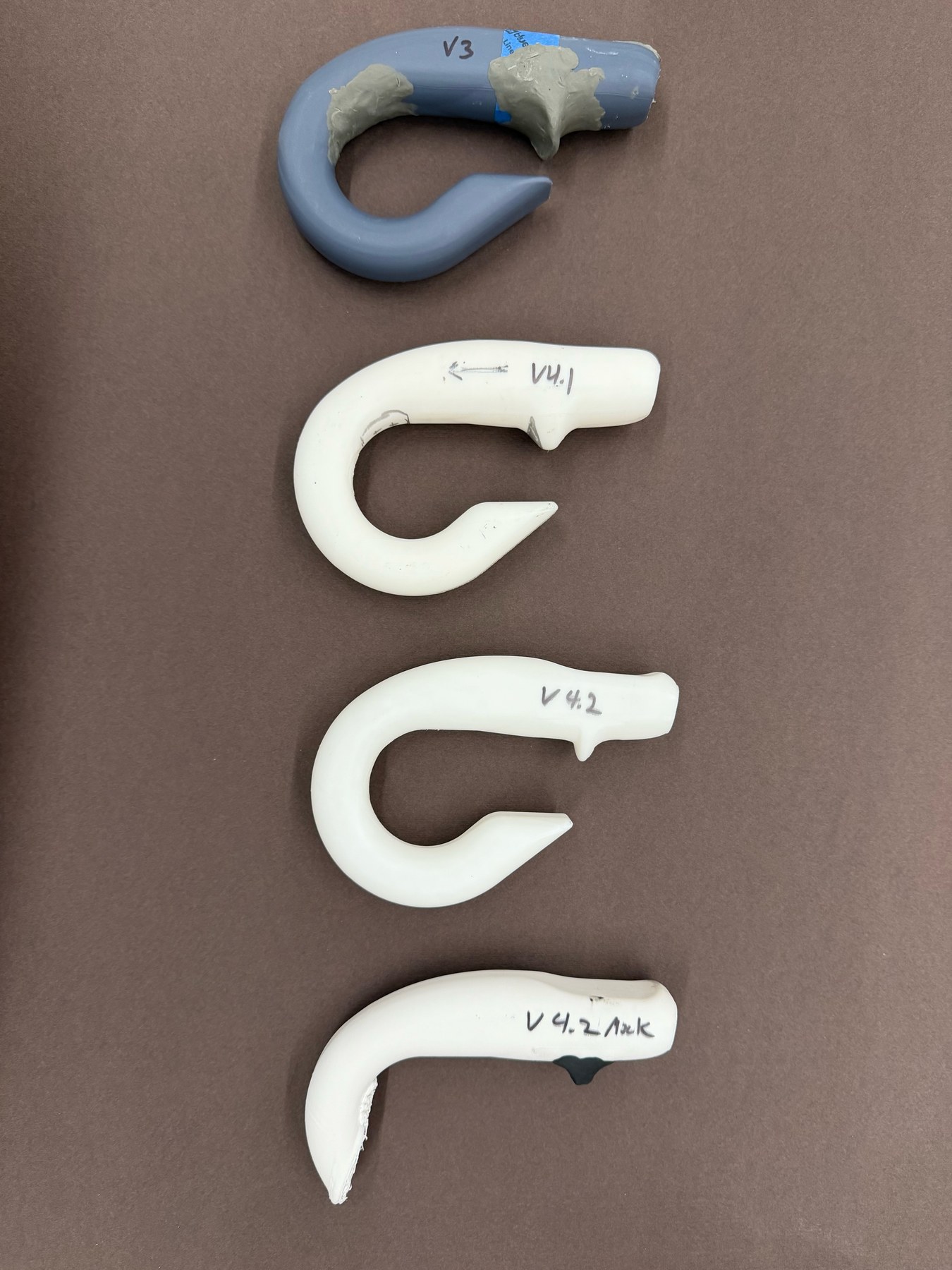
After the pros' feedback, we added a rest for your index finger at the front of the handle, for more control and stability. Getting it to feel like part of the handle took a lot of rounds — tweaking the size, width, position and angle until it sat naturally under the finger.
V5 — the final model
 1 / 3
 2 / 3
 3 / 3
Material direction
Hard core, soft grip.
Body.
Glass-filled nylon (PA6 or PA66 with 30% glass fiber), or hardwood.
Cushion zone.
A gel pad or TPE — soft, grippy and non-slip, even wet or muddy. It can be over-molded straight onto a harder core (nylon, ABS or aluminum), at Shore A 30–60 for comfort, and comes in recyclable, UV-resistant grades.
Why.
It's the best balance of comfort, durability, and actually being makeable.
Every prototype, V0 → V5
Next steps