Déjà Disparu
Be Water — and Remember Your Shape
Hong Kong through Food, Fashion, and Space — how a city built its identity from a hybrid instead of trying to resolve it, and what is lost when that identity gets flattened for a market or a state.
Sky Cheng · skycheng530@gmail.com · @orchidbauhinia
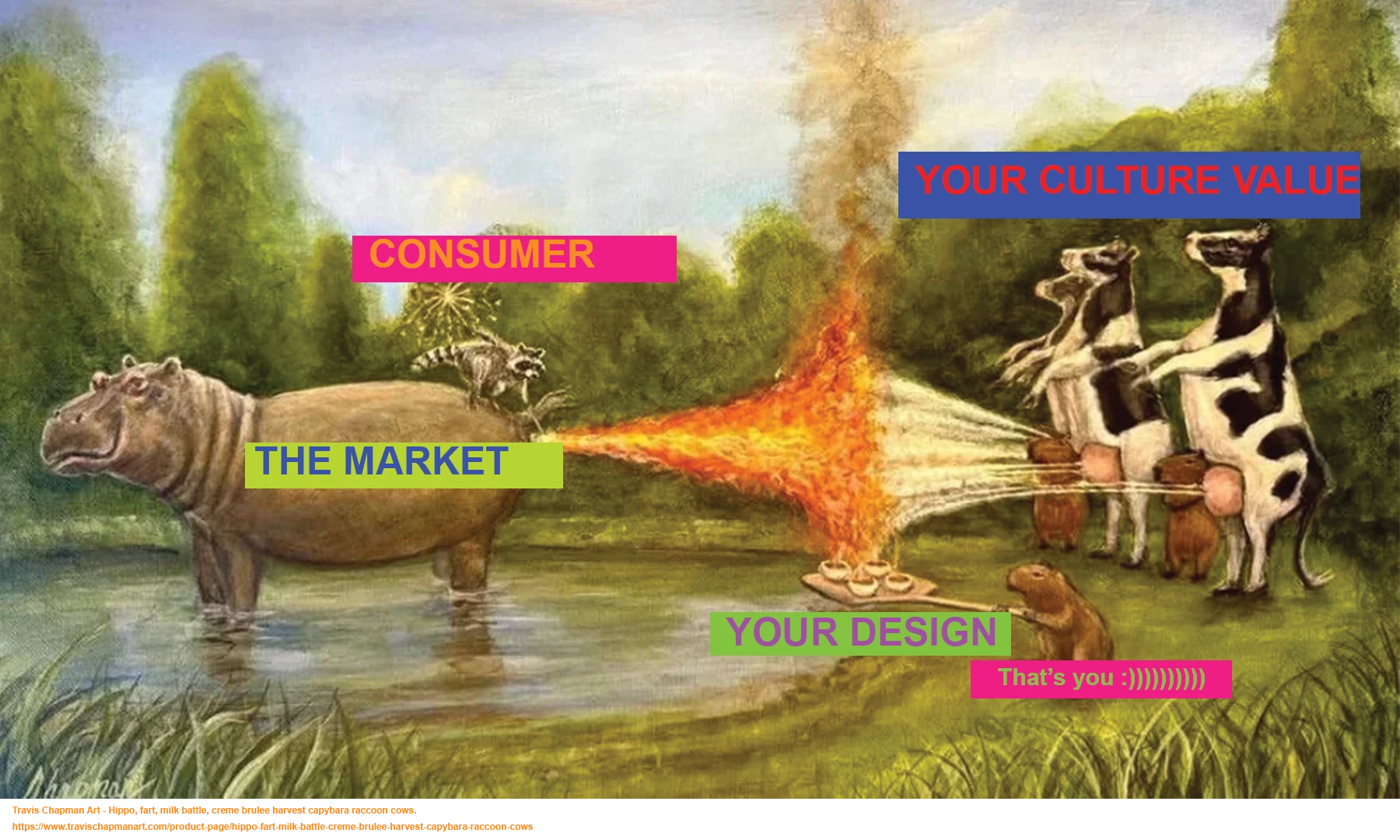
Culture is what makes us different. It gives people in different times and places a distinct identity. That is why archaeologists read objects to understand the people who made them. Products are how culture becomes visible to the world.
When humans gained the ability to travel, colonization and globalization entered the story. There are two kinds of cultural absorption. From below, where people choose to take in, adapt, and create. Generative. From above, where power decides what culture is allowed to be. Erosive. Hong Kong, a land of in-between, lived through both. Looking at Hong Kong through Food, Fashion, and Space, we can see how this city built its identity from a hybrid instead of trying to resolve it. And what is being lost when that identity gets flattened for a market or a state.
This land was once a small fishing village on the southern edge of China, before colonialism, migration, and catastrophe turned it into something neither East nor West could claim. Under British rule, Hong Kong became something the rest of Asia did not have. An open city. Like New York. A place that took people in without asking who they were or what they believed. Every time China closed, Hong Kong opened.
After 1949, the Communist takeover turned mainland China into a closed country without freedom. From 1966, ten years of the Cultural Revolution. Then 1989, the Tiananmen Square massacre. Each event sent waves of intellectuals and artists out of mainland China. Hong Kong, a land of freedom under rule of law, became their new home. It nurtured generations of writers, singers, actors, businessmen, filmmakers, and media tycoons: Bruce Lee, Ni Kuang, Li Ka-shing, Wong Kar-wai, Jimmy Lai.
Hong Kong’s autonomy under “one country, two systems” was meant to preserve the city’s “capitalist system and way of life” with a “high degree of autonomy” until 2047, a promise that began eroding in earnest after 2020. Twenty-nine years after the handover, the freedom China promised is not being fulfilled. The people of this land are watching the place they call home slowly transform into something else.
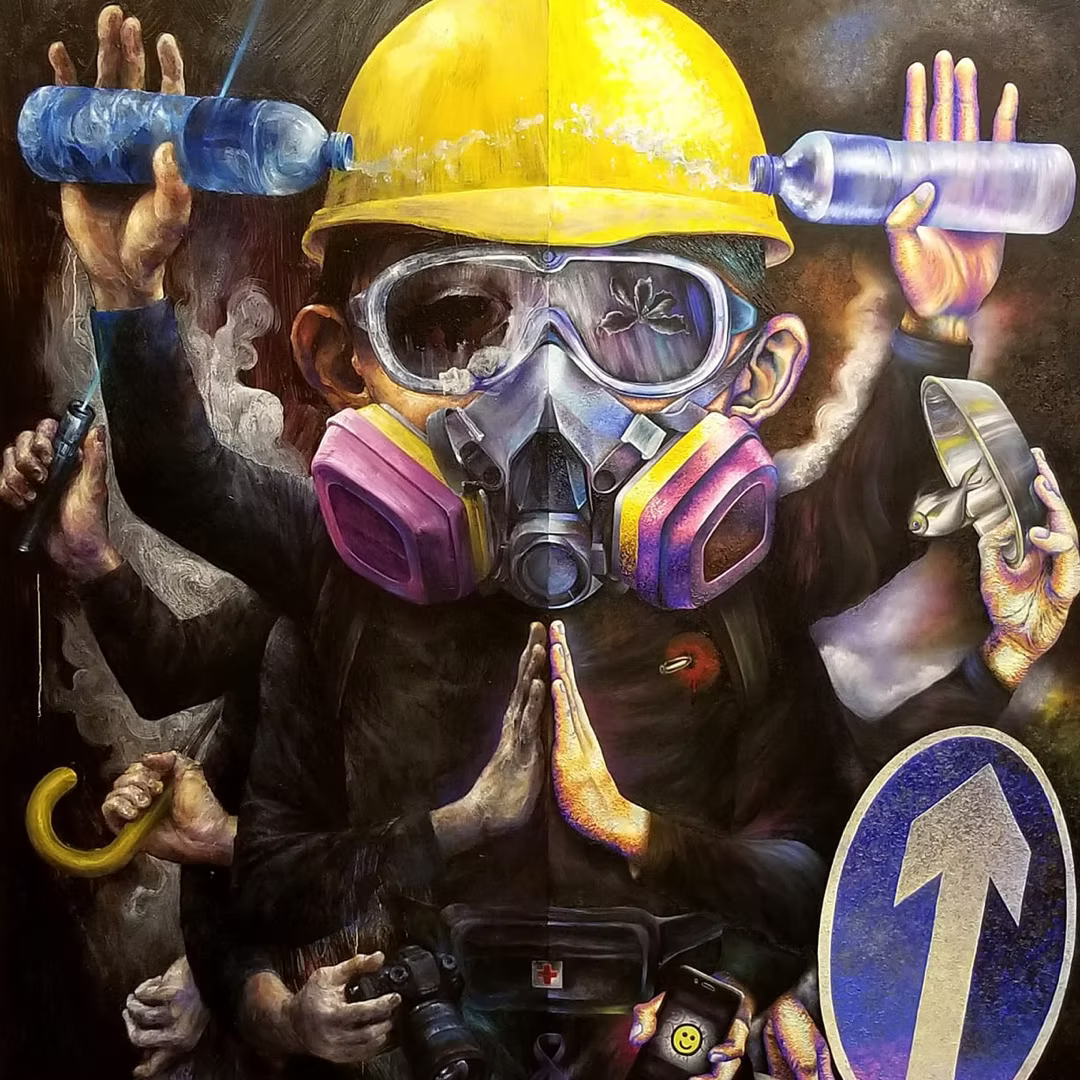
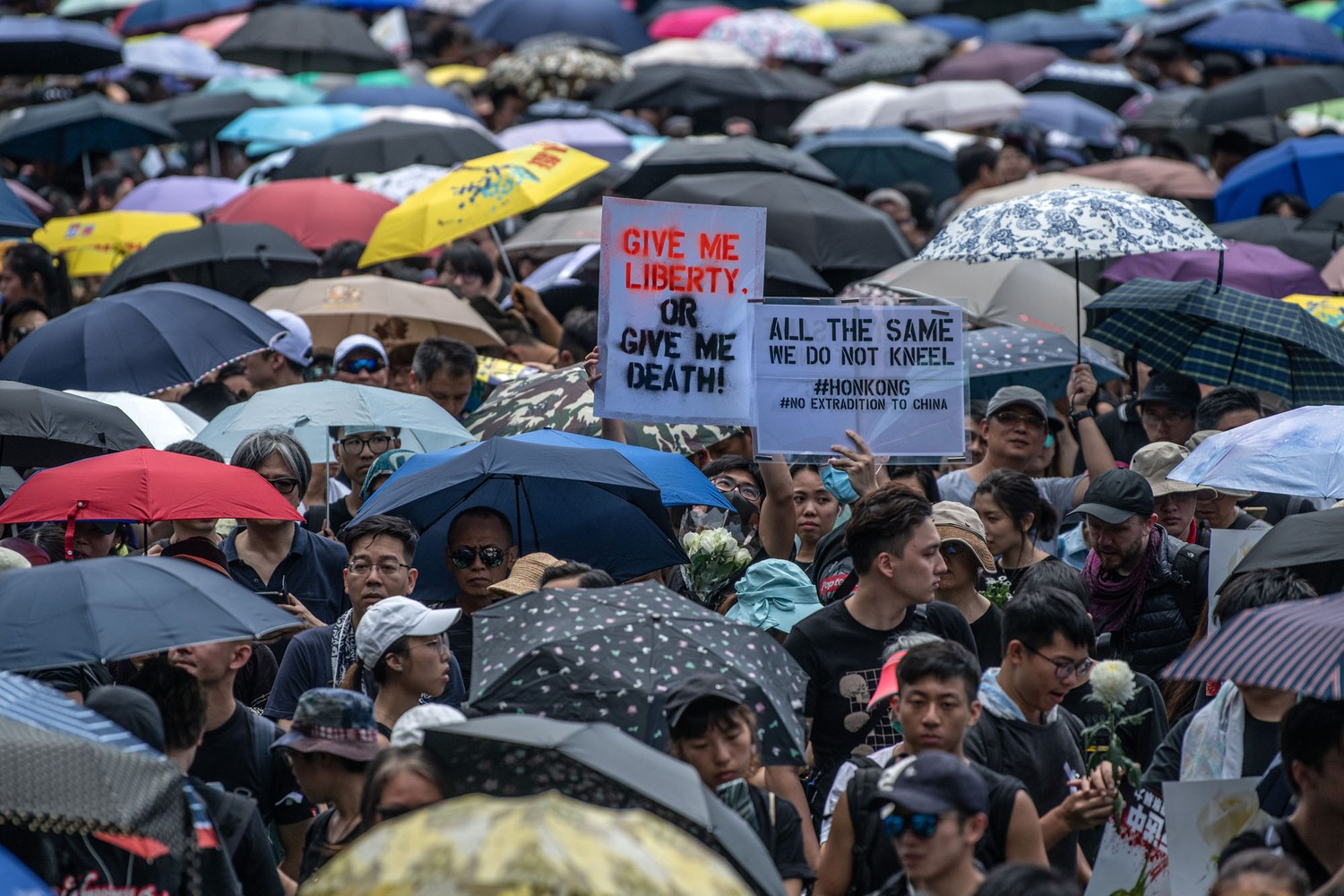
The 2014 Umbrella Movement and the 2019 Anti-Extradition Bill Movement are the clearest proof of what Hong Kong design culture looked like under pressure. Lennon Walls as a method of communication. The yellow umbrella as protective gear and symbol at the same time. The Glory to Hong Kong anthem composed anonymously and crowdsourced. Lumlilumlong’s Thousand Hands Man, layering Buddhist iconography, black-bloc protest gear, and Bruce Lee’s nunchucks held as water bottles. Design thinking distributed across a city. Without freedom, the in-between collapses. Robert Hobbs, writing in 1996 about Hong Kong art on the eve of the handover, named what was already there: a “spectrum of possible identities” defined by “hybridity, contingency, and irony,” continually negotiated as endemic to Hong Kong. Hong Kong culture, as Ackbar Abbas observed in 1997, has long been defined by a particular relationship to disappearance, what he called déjà disparu.
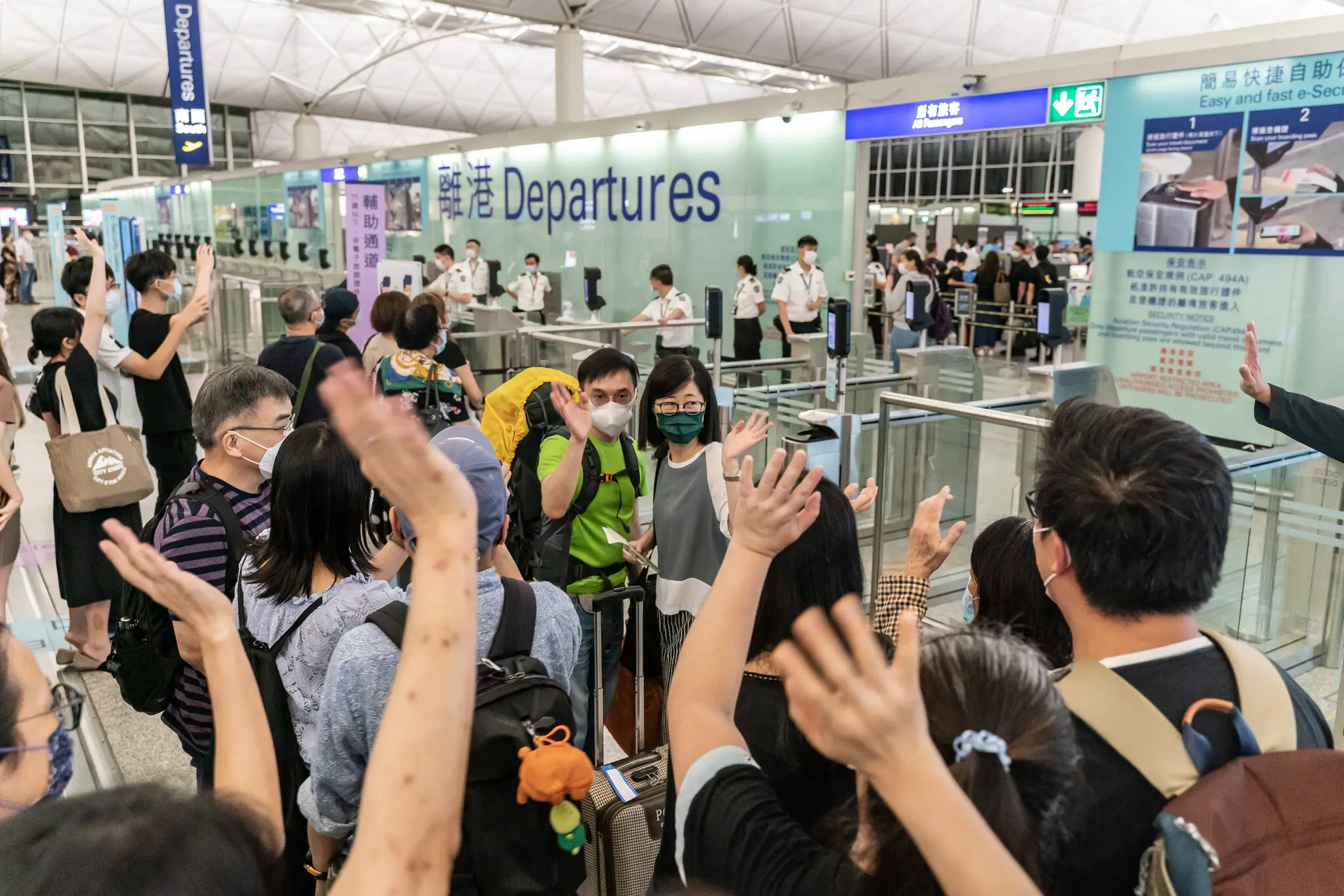
After 2020, more than 144,000 Hongkongers moved to the UK alone through the British National (Overseas) visa scheme. As Hongkongers left, mainland arrivals filled the gap, with around 95 percent of approved talent visa applicants coming from mainland China. The city did not change, but the people changed. The things this city made — the food, the films, the clothes, the buildings — they remember. They were built by the forge, in the years when freedom and absorption ran together. Each one carries the proof of what Hong Kong actually was. Each one is now showing what happens when that proof gets erased.
Food: We Knew the Code
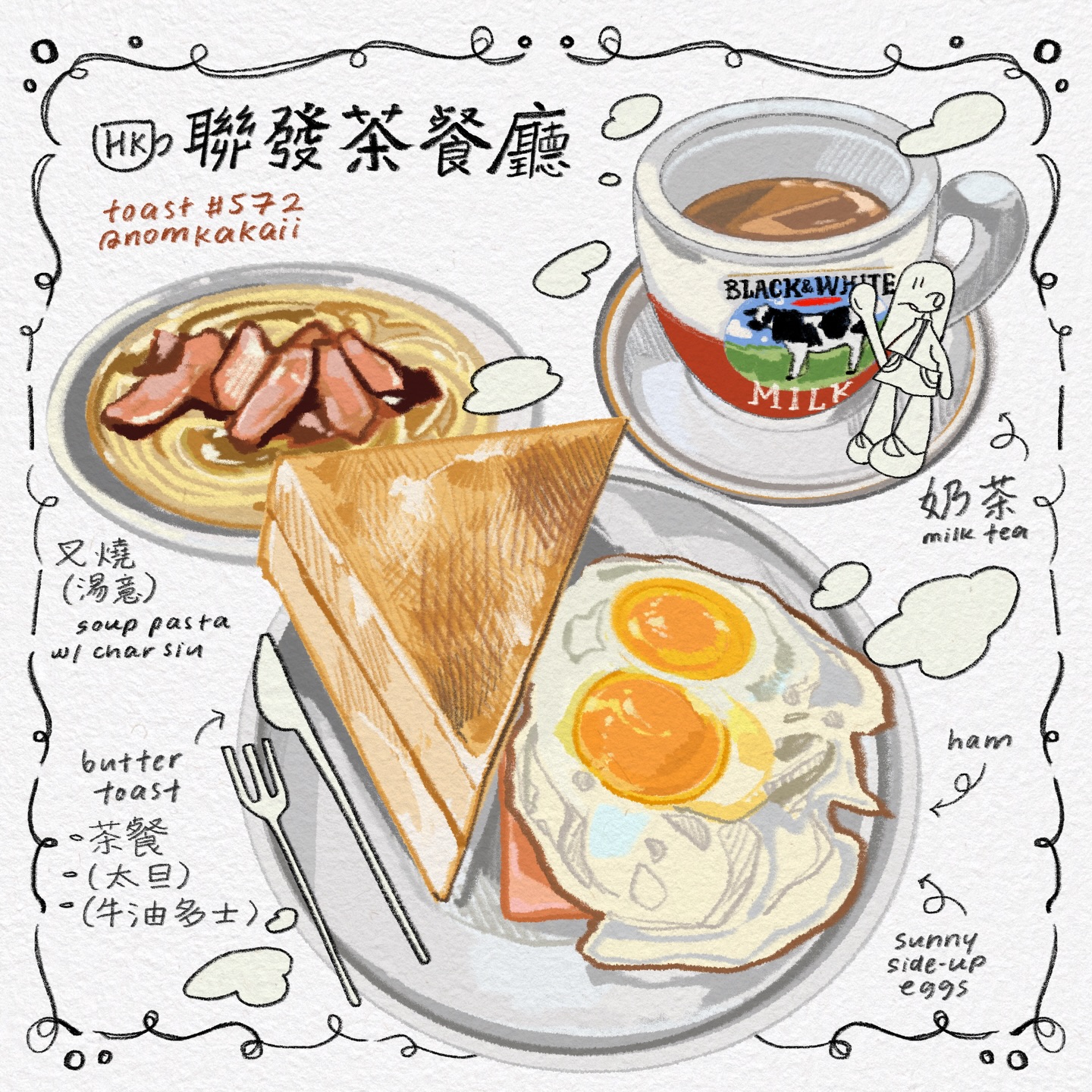
Cha Chaan Teng (茶餐廳) is a third space that shows how colonization created a new form of food culture. When Western culture arrived in Hong Kong, a hybrid emerged. Born not from chefs but from working-class need.
Since the 1850s, Western cuisine had been available only in full-service restaurants, financially out of reach for most working-class locals. Western food was a luxury under glass. After the war, working-class Hongkongers wanted in.
The cha chaan teng was the answer. Local owners reverse-engineered Western food using whatever was affordable. Canned milk, instant noodles, white bread, ham. It was never trying to be authentic. It was trying to be accessible. By stripping the pretensions out of Western food, it accidentally invented a new one.
This is the design story underneath the food story. The cha chaan teng wasn’t designed by anyone. It evolved from a regulatory workaround, the bing sutt (冰室) license that allowed only light refreshments. In the 1960s, a license shift permitted full restaurants. The working class took that opening and built an entire cuisine inside it. The form follows the regulation. The culture follows the form.
Scholar Dr. Sai Wing Peter Leung (梁世榮) describes the cha chaan teng not as a restaurant but as a cultural “third space,” a hybrid that produced its own social rules, vocabulary, and version of belonging. Everything moves fast. The choreography evolved from that need. The minute a QR code menu shows up, that whole choreography disappears.
After 2019, waves of Hongkongers left. New arrivals from the mainland brought different expectations. They wanted the city to speak their language. Locally, the cha chaan teng has become an accidental control point. Walk in. Try to order. The code tells you who is really from here. The culture being displaced is also the culture’s last quiet test.
Economics finished what politics started. As the people who cared about the culture left, the demand shifted. Mainland food chains moved in. Hefu Noodles, Chagee, Sichuan BBQ. They could afford the rent. The form was not killed. It was outbid.
Fredric Jameson and Masao Miyoshi argued that globalization does not erase local culture so much as repackage it, converting lived practice into a consumable image, often sold back to the very people from whom it was taken. The aesthetic without the language. Working-class Hongkongers absorbed Western food, but they transformed it on their own terms, for their own people, in their own language. They did not flatten themselves to be understood. That is how a product becomes a culture. By staying honest to the community.
Fashion: We Built It, They Sold It, We Protect It
How people dress reflects the era they live in. Hong Kong fashion has always grown from the East-West street collision. Every garment is a broadcast. The question is what it broadcasts. As Robert Hobbs observed, “not only artists, but cultural workers in the realms of fashion and antique dealing are involved in defining the culture.”
CLOT, a Hong Kong-based streetwear brand founded in 2003 by Edison Chen and Kevin Poon, broadcasts hype. The brand was built on Hong Kong heritage. It now speaks Mandarin to a mainland audience and uses the city it came from as decoration. CLOT’s 2024 Shanghai pop-up with Adidas Originals, “CLOT 凝結冰室,” used cha chaan teng culture as a fashion collection.
Edison Chen, the brand owner and a Hong Kong actor, spoke Mandarin in the promotional video. The heritage of Hong Kong culture has always been in Cantonese. It was a disgrace, spreading the wrong culture to the world. Especially in a collaboration with Adidas, a worldwide brand. A local Hong Kong actor bending his knees to the market, twisting Hong Kong culture in the process. Homi Bhabha called this kind of cultural performance “mimicry,” an imitation that is never clean, always shaped by the audience it performs for rather than the culture it claims to come from. The signal of CLOT using Hong Kong culture is loud, but the message is hollow.
On the other side, local indie brands are being true to their culture. David Clarke argues that Hong Kong’s cultural producers after 1997 have had to navigate a paradoxical decolonization, moving not toward independence but into a different colonial relationship. For some, the in-between identity became a survival strategy. For others, it became a creative one.
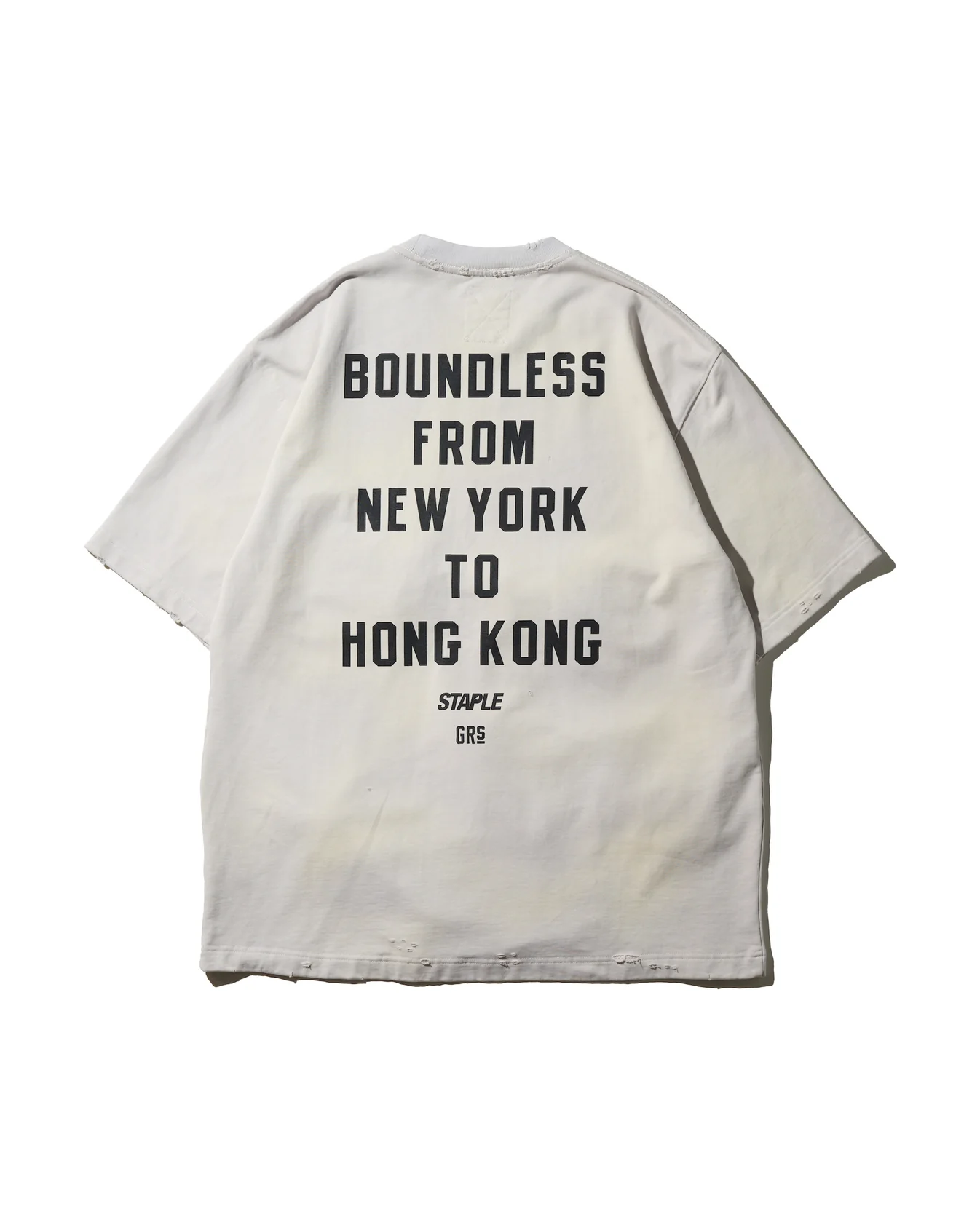
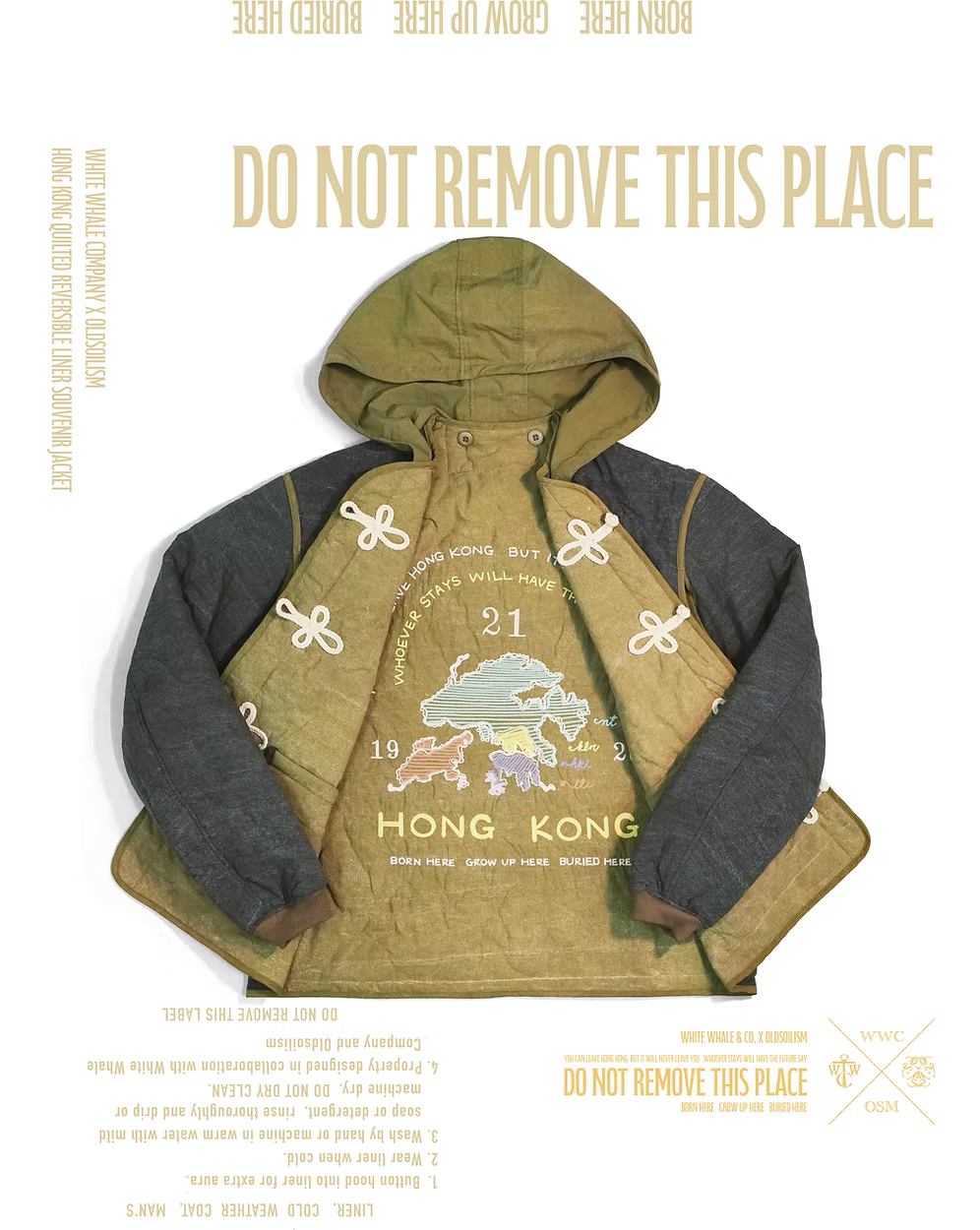
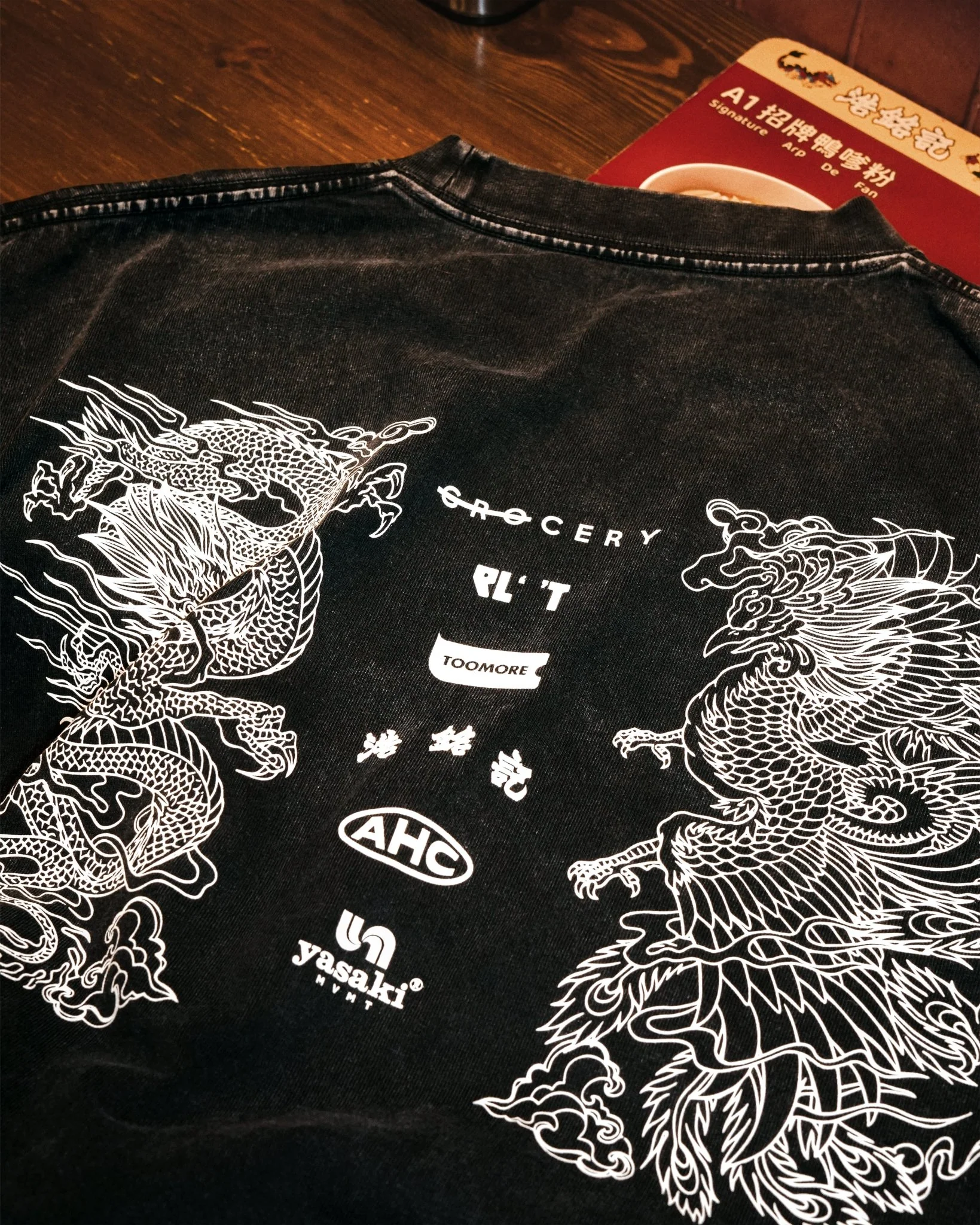
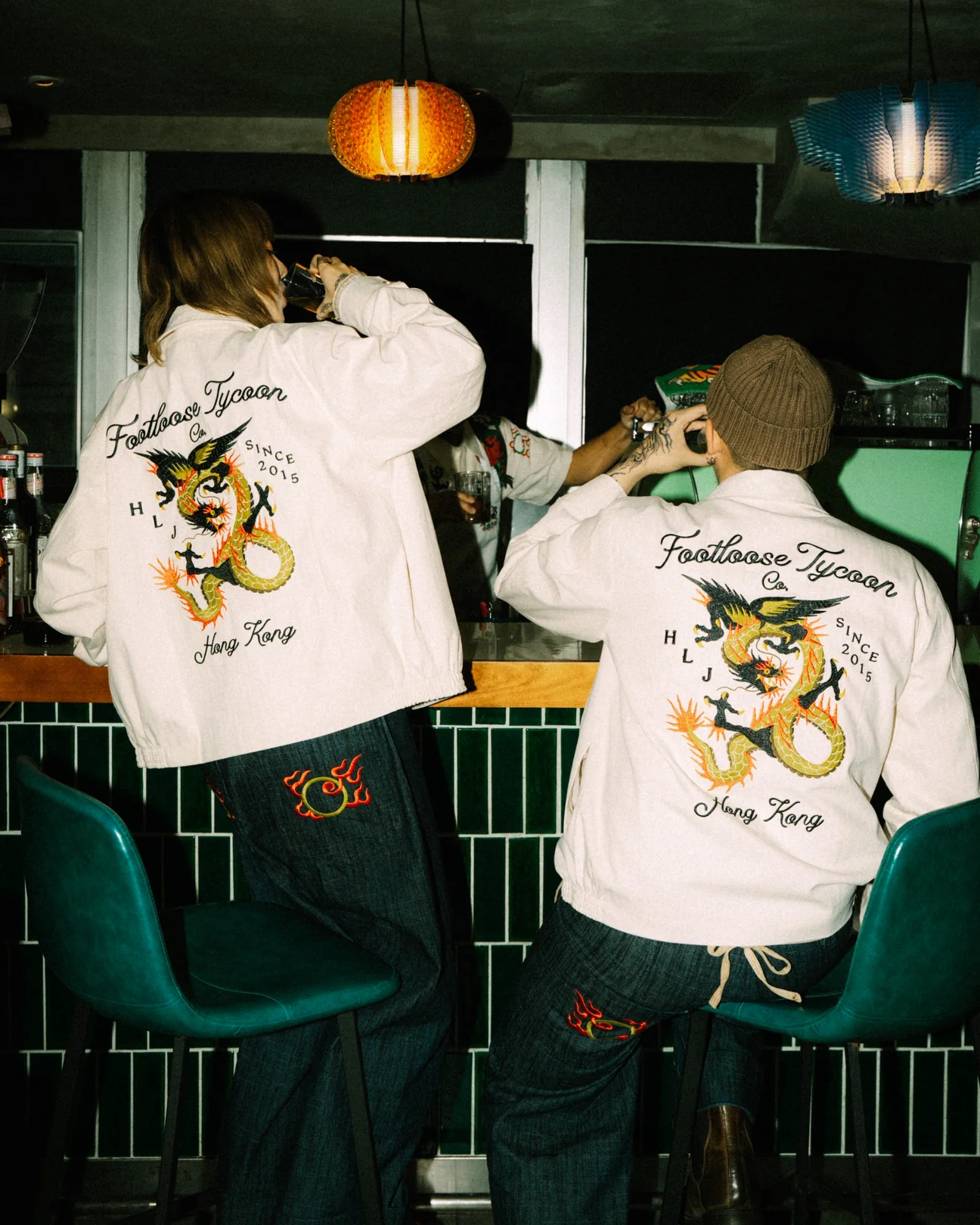
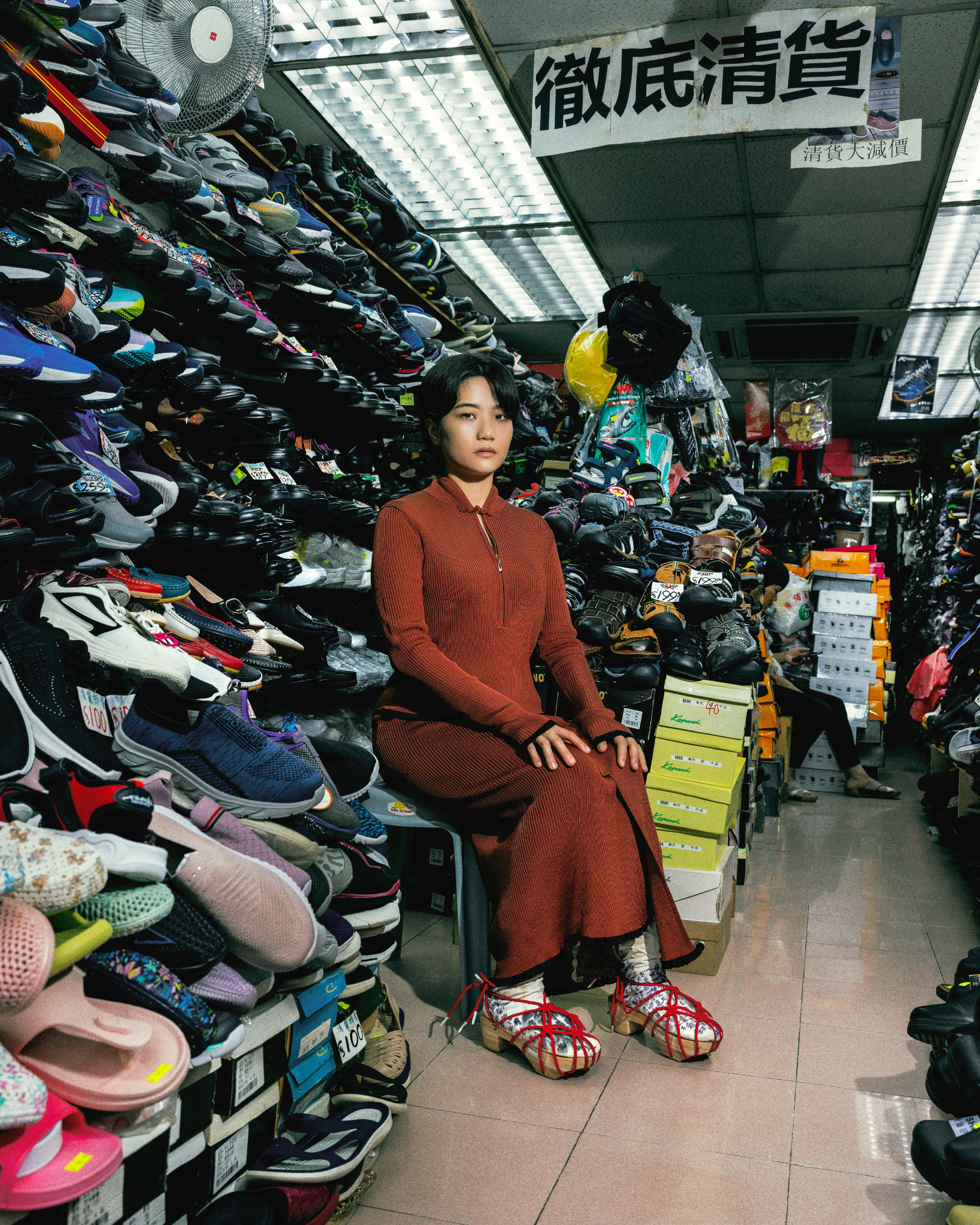
These brands collaborate with local restaurants, tattoo artists, and Hong Kong local elements. GRS. Grocery. Oldsoilism (老土主義). Footloose Tycoon. Yat Pit. A whole generation of Hong Kong designers refusing to flatten themselves to be sold. They broadcast quieter, but the message has roots and connects to the heart of Hong Kong. Traditional tattoos, Cantonese slang, cha chaan teng style, British Hong Kong era. These cultures only travel when there is something real behind the broadcast. Something people can actually feel. Do not twist your own culture to fit the market. The people who know the culture will just know you are faking it.
This is the choice many Hong Kong designers face. The choice every designer working with cultural identity will face. Designing against what the market wants becomes another form of punk design. Be true to your culture. This is the power to create a new vision, a new story.
Closing: Be Water, My Friend
Ni Kuang (倪匡) once said:
不必摧毀這個大城市的建築物,不必殺害這個大城市中任何一個居民,但是只要令這個大城市原來的優點消失,就可以令它毀滅、死亡。
“You don’t need to destroy the buildings. You don’t need to kill a single resident. But make the city’s original strengths disappear, and you can destroy it, kill it.”
— Ni Kuang (倪匡)
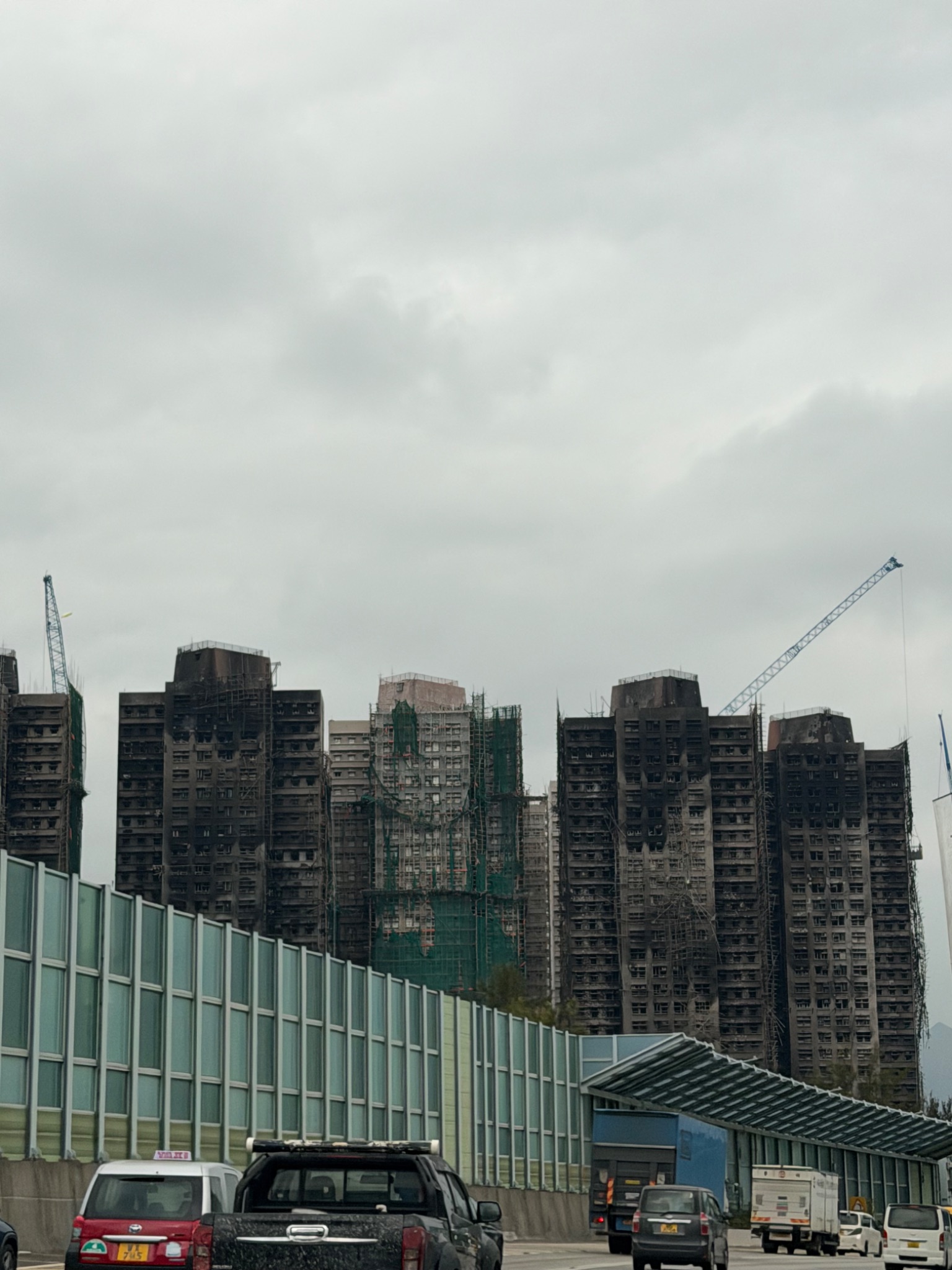
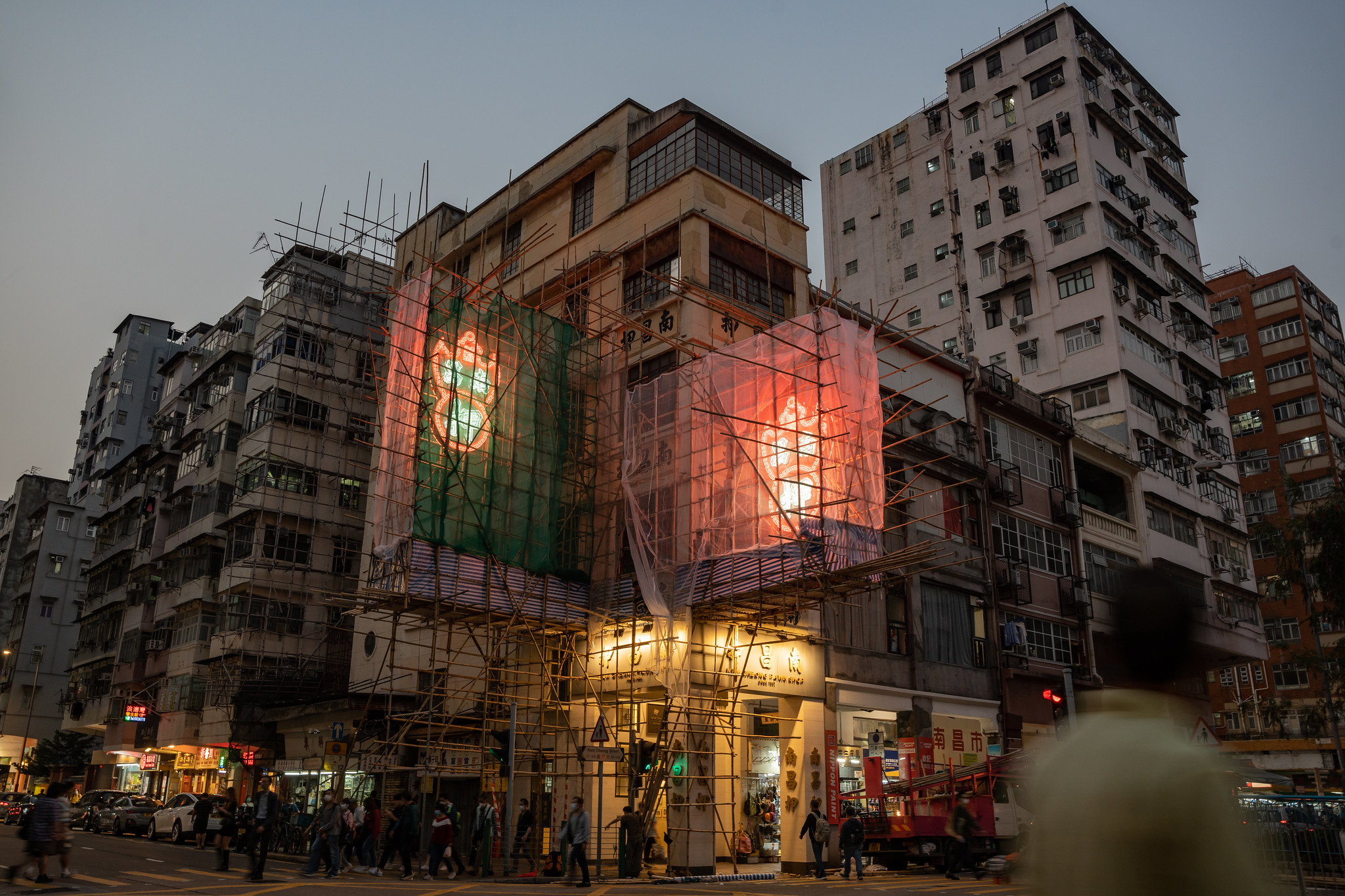
He saw it coming. The culture, the infrastructure, the people, and the products are slowly disappearing. Walk through Hong Kong now. The streets do not look like a Wong Kar-wai movie anymore. The neon that lit Chungking Express and Fallen Angels, that gave Blade Runner its look, that defined what cyberpunk Asia even meant — almost all of it is gone. The bamboo scaffolding that held up the city’s skyline is being phased out too. We are fighting to keep it. We do not want the bamboo to have the same ending as the neon.
Are Hong Kong dying? Not sure. But for sure, the city does not feel like the one I remember. The films, the language, the food, the clothes, the buildings, the lights. Each one carries the proof of what Hong Kong was. Each one is now showing what happens when that proof is taken. That memory will become our core value.
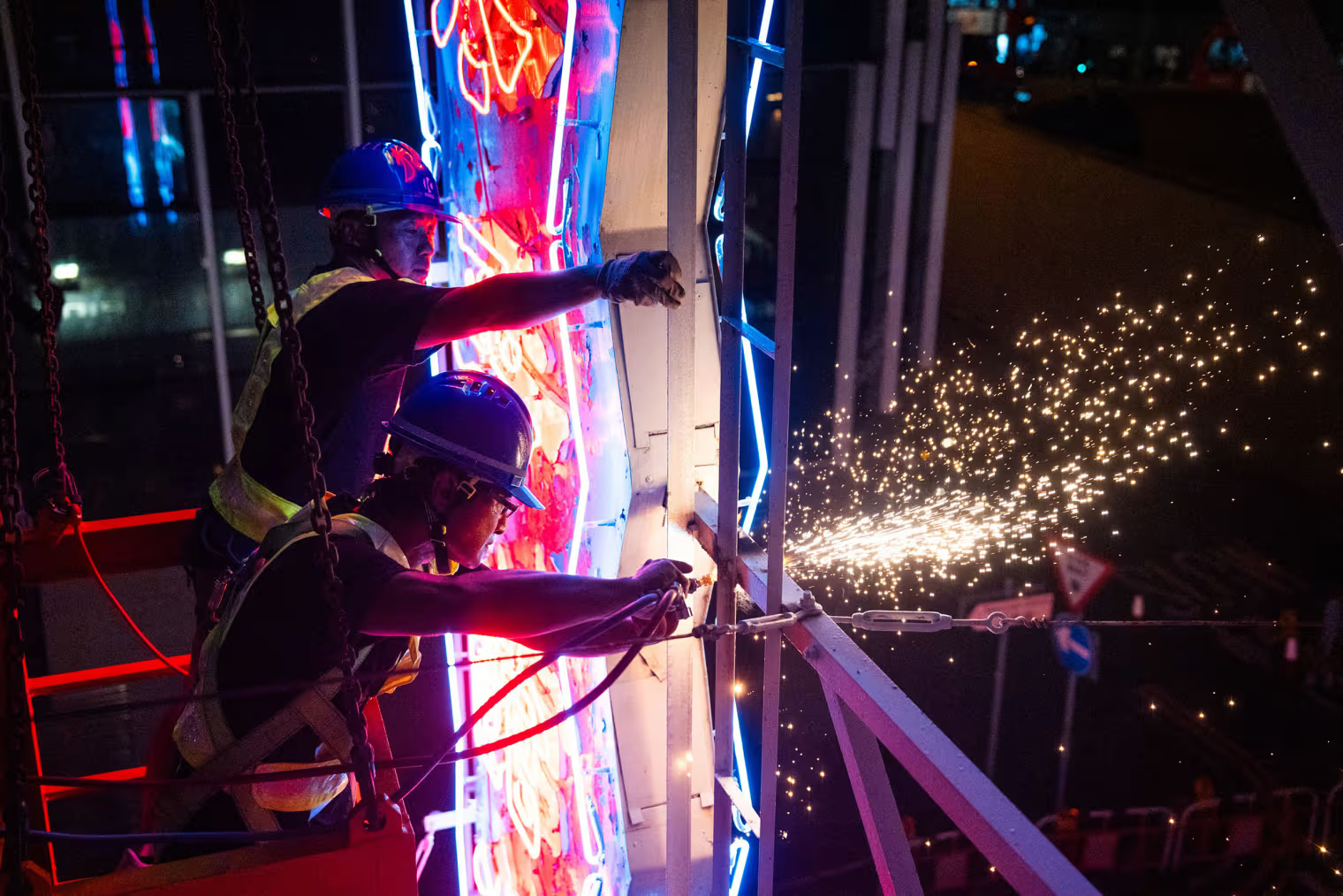
Culture is also what we choose to carry forward. The Hong Kong forge built itself by absorbing what came. The choice now is whether to keep absorbing, keep adapting, keep transforming, without losing what we are.
To my fellow Hongkongers far from home, in London, Toronto, New York, Vancouver, Taipei, wherever you landed, you are brave. You are absorbing, adapting, transforming based on where you are. The power of the in-between is that we can become anyone. But do not forget the history. Do not forget the culture. The forge moved with you. You carry it now.
Bruce Lee said it in 1971. “Be water, my friend.”
Water takes the shape of whatever holds it. But water also carries everything it has touched. That is the design lesson Hong Kong teaches. Not to resolve the in-between. Not to flatten for the market. To stay fluid, but remember the shape you came from.
“Be water. But know what shape your water is.”
Bibliography
- Abbas, Ackbar. Hong Kong: Culture and the Politics of Disappearance. Minneapolis: University of Minnesota Press, 1997.
- Bhabha, Homi K. The Location of Culture. London: Routledge, 1994.
- Clarke, David. Hong Kong Art: Culture and Decolonization. Durham, NC: Duke University Press, 2002.
- Hobbs, Robert. “Hong Kong: An Uncertain Dream.” In Hong Kong Now! Eight Hong Kong Artists. Richmond: Anderson Gallery, VCU, 1996.
- Jameson, Fredric, and Masao Miyoshi, eds. The Cultures of Globalization. Durham, NC: Duke University Press, 1998.
- Leung, Sai-wing 梁世榮. “茶餐廳與香港人的身份認同.” In 香港.文化.研究. Hong Kong University Press, 2006.
- Law, Diego Wu. “The Hong Kong Migration Shuffle: Brain Drain and Brain Gain.” Migration Policy Institute, 2024.
- Lee, Peter. “Over 144,000 Hongkongers Move to UK in 2 Years Since Launch of BNO Visa Scheme.” Hong Kong Free Press, 2023.
- Leung, Hillary. “‘It’s Disappearing Very Fast’: Hong Kong’s Fading Neon Heritage.” Hong Kong Free Press, 2023.
- Lumlong, Lumli. “Thousand Hands Man,” 2019.
- Maizland, Lindsay, and Clara Fong. “Hong Kong’s Freedoms.” Council on Foreign Relations.
- May, Tiffany. “Ni Kuang, Novelist and Screenwriter for Martial Arts Films, Dies at 87.” The New York Times, 2022.
- Tsui, Karina. “Building a Modern Metropolis Using a Centuries-Old Technique.” CNN Style, 2025.
- Welsh, Frank. A History of Hong Kong. London: HarperCollins, 1997.